
One day you open your computer and realize that work which required a developer, a designer, and an editor for several days has been completed by AI before lunch.
The code runs. The page looks convincing. The research may even be more complete than yours.
Your first response may not be excitement but a sinking feeling:
If it can do all of this, what is left for me?
That is not an exaggerated fear. Many internet professionals built their confidence on what they knew how to do. We spent years learning software, methods, and professional language until we became the person who could solve the problem.
Now the tool itself has begun solving problems.
The source of anxiety is not only that AI is becoming intelligent. The skills in which we took pride are becoming cheap very quickly.

The First Scarcity AI Removes Is the Ability to “Make Something”
Writing code that runs used to be a threshold. Making a respectable interface was a threshold. Turning scattered information into a structured article was another threshold.
Those thresholds will not disappear entirely, but they are falling quickly.
AI can produce ten headlines, three page designs, and a product prototype in minutes. It does not become tired or offended when an idea is rejected.
An uncomfortable truth follows:
Simply making the assigned thing is becoming a weaker proof of a person’s value.
That sounds harsh, but it may not be bad news. We used to spend too much time on carrying, repeating, and waiting. Between an idea and reality stood tools, technical barriers, communication, and budget. Many good ideas were exhausted by that friction before they began.
AI is removing some of it. More people can make their ideas real, and all of us must face a question we could once avoid:
Now that the thing exists, is it actually any good?
The Real Danger Is Not Failing to Learn AI
A common anxiety now is: should I learn another model? Did I miss another tool? Someone else made ten things today—why did I make only one?
The faster tools change, the less meaningful chasing them becomes. An operation learned today may be replaced by a button tomorrow. A carefully recorded prompt may be unnecessary next month.
The real danger is receiving an answer from AI and no longer knowing how to judge it:
- Is this problem worth solving?
- Is this solution good, or does it merely resemble a standard answer?
- Does the user need more features, or less interruption?
- Even if this can be built, should we build it?
Without judgment, faster AI may simply help us produce mediocrity faster.
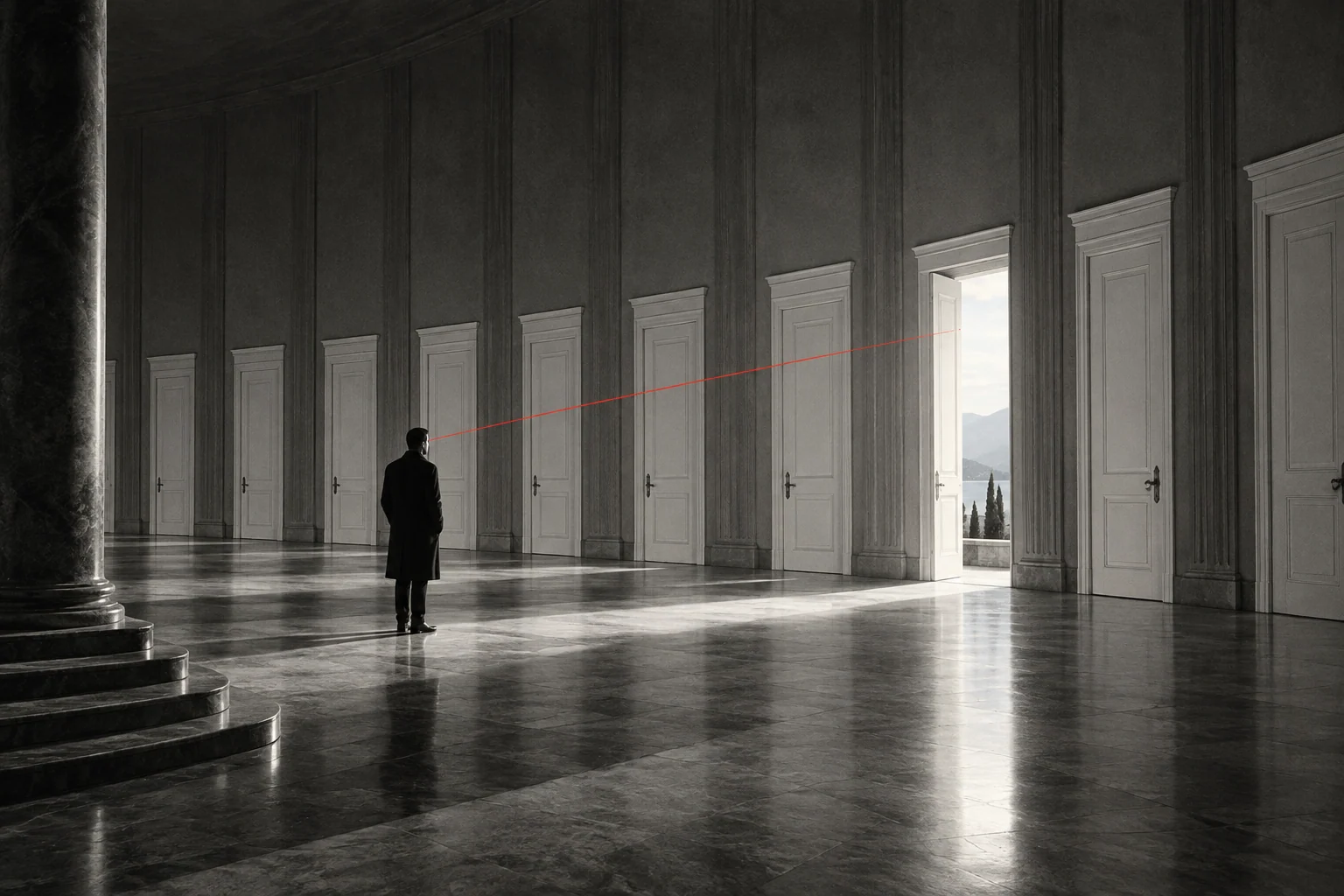
AI Narrows the Gap in Execution but Widens the Gap in Judgment
Two people can use the same model and receive completely different outcomes. The difference is not only who writes a better prompt.
One person accepts the first answer that looks respectable. Another sees where it is empty, excessive, or disconnected from the real problem.
One asks AI to keep adding. Another knows when to remove.
One pursues “it looks finished.” Another asks, “Did it actually help anyone?”
AI has distributed execution ability to everyone, but it did not distribute judgment with it.
Judgment comes from a long life: projects that failed, ideas users rejected, moments when we had to overturn our own work, and feelings that never fit inside a tutorial.
These experiences look slow. In the AI era, they are becoming the part that is hardest to copy.
Five Capabilities Will Become More Valuable
First, finding the real problem. A user asks for a button, but what sits underneath may be insecurity. A manager asks for a “premium feel,” but what is missing may be clarity and trust.
Second, making trade-offs. AI is good at offering more. People must decide what not to build. A product’s shape is often defined by what was removed.
Third, distinguishing good from bad. Producing ten options is easy. Knowing which deserves to continue requires taste, experience, and sensitivity to detail.
Fourth, understanding a specific person. Data can describe the majority but rarely replaces seeing a person’s hesitation, exhaustion, shame, or desire in this particular moment.
Fifth, owning the outcome. AI can offer advice, but it will not face the user or bear the consequences of a wrong decision for you.
A person’s future value depends not only on how much they can make, but on what they choose, what they abandon, and what they are willing to answer for.

I Also Met a Solution That “Had Everything, Yet Felt Wrong Everywhere”
Recently, I asked AI to help complete a small product.
The pages existed, the code ran, and the copy was complete. No individual part had an obvious error. Put together, though, the product gave people no desire to continue.
I stopped and asked only one question:
At which moment in a user’s life should this product truly help?
Once an answer appeared, we removed half the features and rearranged the most important step. The product became clearer.
AI had completed a large amount of work, but what changed the direction was not a more complicated generation. It was a question closer to human life.
This scene will become common: technology piles things in front of us, and people recover meaning from the pile.
Ordinary Internet Professionals Need to Reconsider Their Place
We used to think of ourselves as executors: receive a requirement, find a solution, complete the delivery.
Next, we may act more like editors, directors, and owners. We tell AI what the purpose is, decide whether its result is trustworthy, remove what is unnecessary, and sign our names to the final result.
This is not a retreat backstage. The human position is moving forward—from operating tools to defining problems and choosing direction.
You Do Not Need to Prove That You Are Stronger Than AI
We do need to learn AI. But there is no need to measure ourselves every day by how many new tools we have mastered.
It is more valuable to look at an AI-generated result and keep asking:
1. Does it solve a real problem, or merely finish the surface task?
2. If only one thing could remain, what matters most?
3. Am I willing to put my name on this result?
These questions appear slow, but they stop us from sliding rapidly into mediocrity.
AI Cannot Take Away the Life You Actually Lived
AI may remove the scarcity that many skills once possessed.
But it cannot take the night you could not sleep, the regret after a wrong choice, the warmth of being understood by a stranger, or the taste and restraint formed through repeated failure.
Those experiences determine which problems you notice, what moves you, and who you are willing to create for.
Do not compete with AI to see who can behave more like a machine. Machines will keep becoming faster.
What you need to become is the person who knows why to begin, where to go, and is willing to own the result.
AI can complete more and more things for us. It cannot decide what is worth spending a life to complete.
---
Fact note: this article discusses the broader trend of AI tools and agents lowering the execution barrier in content, design, research, and software. Capabilities continue to vary by product, model, and environment. The focus is the changing value of work; it does not claim AI can complete every task without human review and clear responsibility.