
The hardest part of running a one-person company is often not the amount of work. It is having to change identities all day.
In the morning you are the product manager: should this feature exist? At ten you become the designer: why does this page feel cheap? In the afternoon you write code, fix bugs, and test payments. At night you still have to write an article, make images, read the data, and reply to messages.
None of these jobs is terrifying on its own. What drains you is forcing one brain to switch among a dozen roles.
The upper limit of a one-person company used to be the founder’s physical energy. Recently, I have felt that limit beginning to change.
On September 10, OpenAI released the public beta of the Agents API. It opens the agent runtime behind Codex to developers: managing long-term context, calling tools, using work environments, coordinating subagents, and preserving intermediate results.
It sounds technical, but the signal is simple:
AI is no longer sitting inside a chat box answering questions. It is beginning to enter the workflow.
This Is More Than a Smarter Chat Box
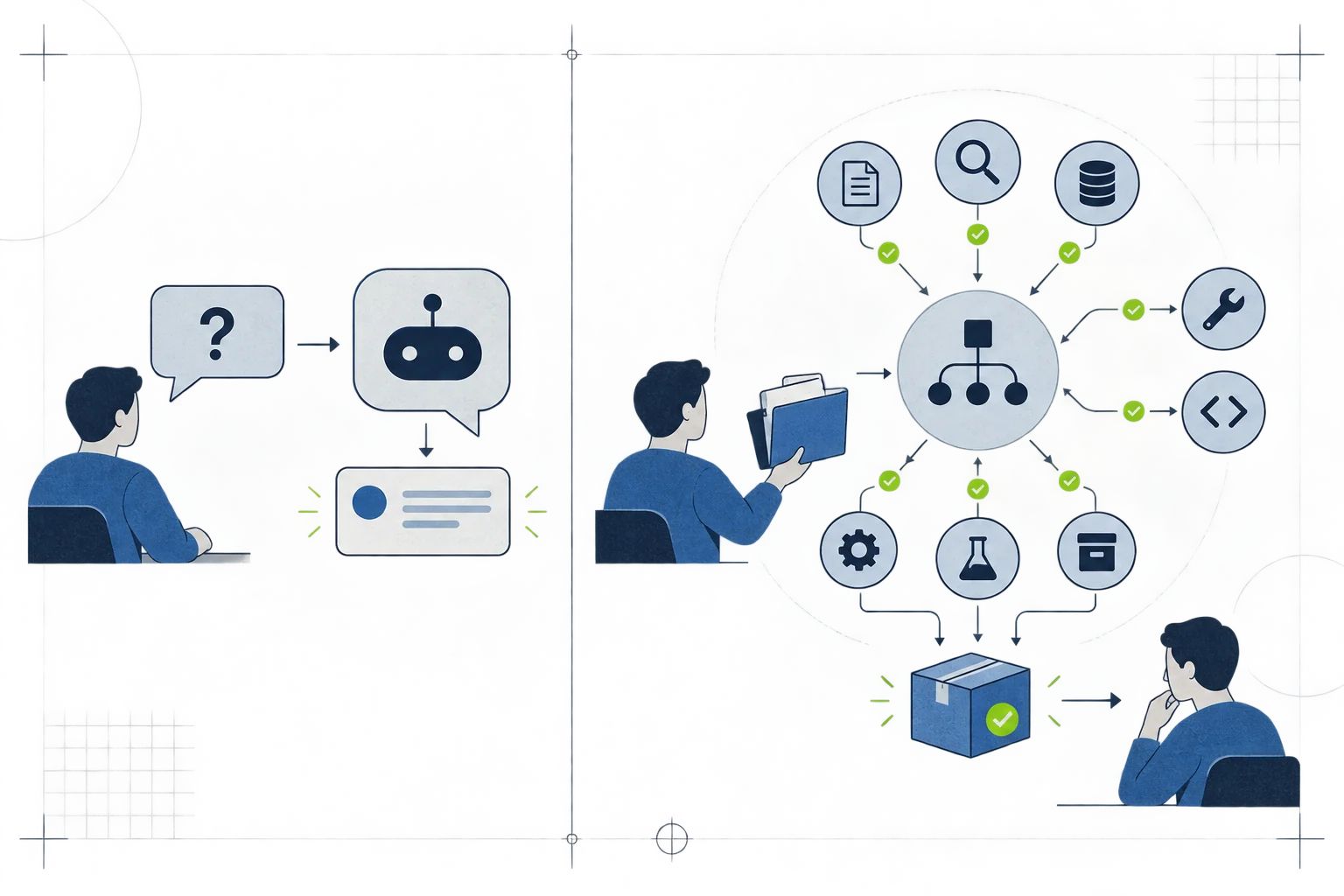
An ordinary chat works like this: you ask one thing, it answers; you close the window, and the work mostly ends.
An agent receives a task such as: “Review recent user feedback, identify the three highest-priority problems, modify the code, run the tests, save the result, and tell me what risks remain.”
That cannot be completed by generating a paragraph. AI must read material, find information, call tools, operate on files, execute code, diagnose failures, try again, and finally deliver something that can be inspected.
A chat ends with an answer. An agent ends with completion.
The Agents API lowers the barrier to building such an execution system. Developers do not need to recreate all the machinery for long-task context, tool selection, work environments, and coordination among multiple agents.
That may matter even more directly to a one-person company than to a large organization. A large company already has roles and divisions. What a one-person company lacked was not more ideas, but a structure that could reliably carry ideas through to completion.
A One-Person Company Expands Its Range of Work, Not Its Headcount
The phrase “digital team” can suggest that one person suddenly has ten free employees who never sleep. Reality is not that easy.
AI can misunderstand the objective, omit facts, and confidently deliver a result that looks complete but has never been verified.
The actual shift is subtler. A task that used to occupy four uninterrupted hours can first be delegated to an agent. A designer who cannot code can cross an adjacent skill boundary. Some jobs that previously waited in a queue can move in parallel.
A one-person company does not become “ten people.” One person becomes able to manage longer, more complex work across more professional boundaries.
That is an expansion of working range. You still have one brain, but no longer need to perform every action in the process by hand.
How Would My Digital Team Divide the Work?
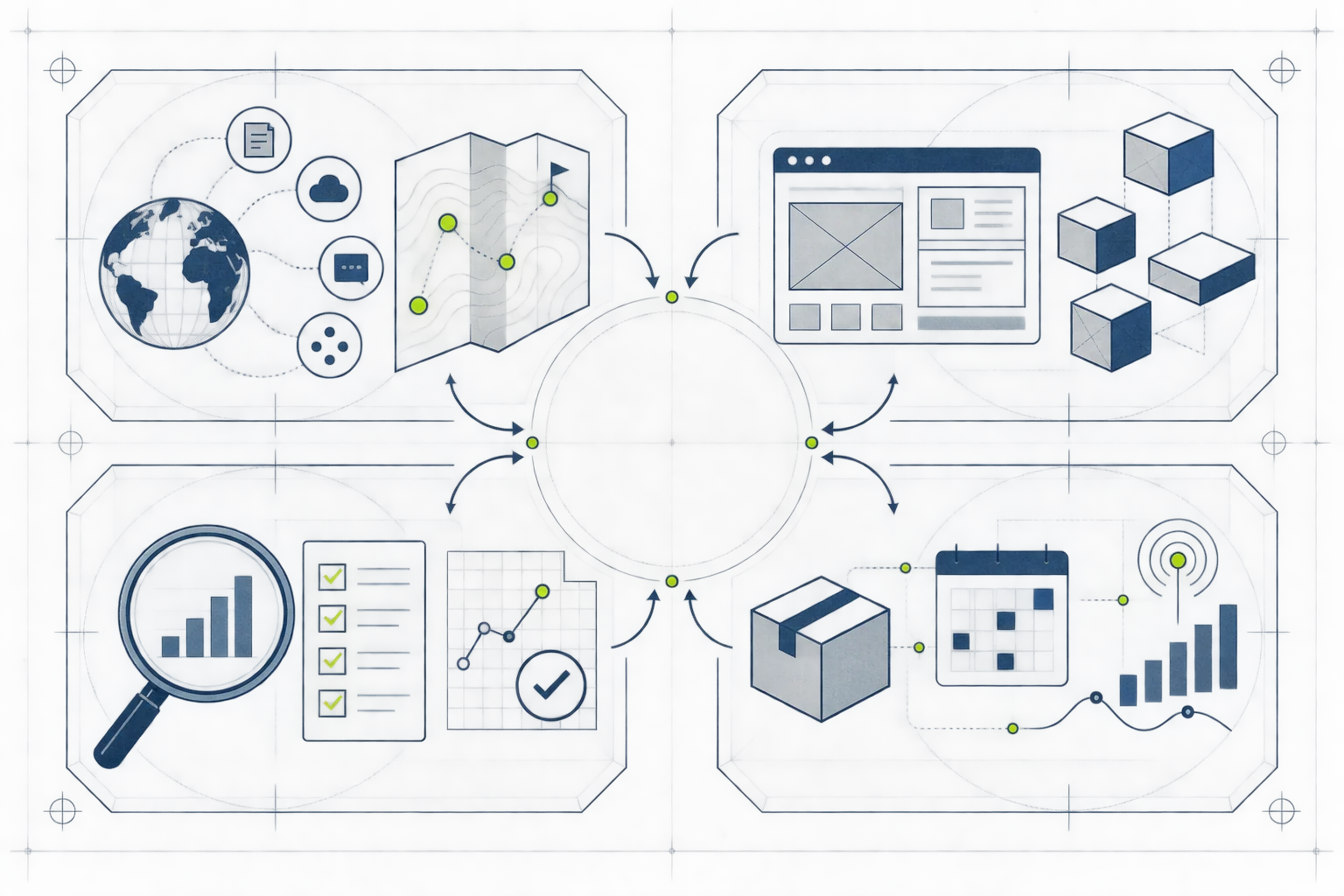
If I designed a minimum digital team, I would not begin with ten theatrical AI personas. I would need four capabilities:
- Discover: find material, read feedback, compare competitors, and identify questions worth testing.
- Make: write code, organize content, and create design drafts that turn ideas into inspectable things.
- Verify: check sources, run tests, inspect pages, and find omissions or contradictions.
- Operate: update content, organize data, maintain release processes, and turn one success into repeatable work.
My own position is not outside these four. I decide why we are doing the work, what comes first, what counts as good, and who is responsible when something goes wrong.
A digital team does not make decisions for me. It helps my decisions become results faster.
Breaking Apart One of My Days
Consider Xiazi. Each day’s publication contains many jobs: finding news, checking dates, reading original sources, preventing repetition, extracting a point of view, translating, designing posters, checking images, and updating the site.
What truly needs my judgment is which nine stories deserve to enter today’s issue, why they matter, and what attitude the work should take toward them.
Many other steps are explicit, repetitive, and verifiable. Different agents can gradually handle them, while a verification stage reads the result back.
The same is true when I work on Yixiu, Wendao, and Bu’er. AI can read a project, organize problems, propose changes, modify an interface, and run tests. But technical documentation cannot decide whether Yixiu should feel quiet or energetic, how Wendao should interpret an ancient text, or whether Bu’er respects the complexity of a real person.
Writing an article follows the same pattern. Sources can be found, an outline can be adjusted together, images can be generated, and layout and upload can be automated. But I still need to decide what the article means, which opinions are mine, and which sentences should not be published.
AI expands capability; human attitude determines what that capability is used for.
The Worst Approach Is to Stuff the Whole Company into One Prompt
People often begin with an enormous command: “Run this product, automatically find users, grow it, and make money.”
The problem is not ambition. The task cannot be accepted or rejected. What counts as finding a user? Which growth is worth having? Which methods are forbidden? Where are results saved? How do we recover from failure? Who checks whether the numbers are real?
Without those definitions, an agent only transforms a vague objective into a longer vague result.
A good digital team needs clear working contracts:
1. What is the input? Which files, data, and context may it read?
2. What is the task? Which specific problem is this run solving?
3. What is the deliverable? A document, code, images, or a verifiable online result?
4. What are the acceptance criteria? How do we prove completion rather than an appearance of completion?
5. When must it stop? Who decides when publication, payment, privacy, or irreversible action is involved?
Managing AI differs from managing people, but the central requirements are familiar: clear objectives, explicit boundaries, and inspectable results.
People Have Not Left the Process; They Have Moved Further Forward
As execution becomes cheaper, the human part becomes clearer.
First is choice. The world contains too many possible things to build; the hard part is deciding which deserve to exist.
Second is taste. AI can return twenty versions but cannot know which one feels like you or belongs to this product.
Third is empathy. Data shows where someone stopped, but may not explain why they hesitated, felt afraid, or did not want to continue.
Fourth is responsibility. An agent can execute a task. The person still owns what is released, what is promised, and who may be harmed.
The stronger an AI team becomes, the less its creator can behave like someone merely assigning tickets. The creator becomes the product’s editor-in-chief: knowing what to remove, when not to publish, and which efficiencies are not worth pursuing.
Do Not Build Ten Agents First. Hand Off One Repeated Job
To begin now, choose a job that appears at least three times a week, follows a relatively fixed process, and produces a result you can check.
For example:
- collect ten items in one field each day and retain the original sources;
- read user feedback weekly and group it by problem type;
- verify image dimensions, links, and local paths before each release;
- summarize product data nightly and alert only when something is unusual;
- preserve a verified workflow so it can be continued next time.
Let one agent complete one small task reliably before adding a second role. Establish acceptance before parallelism. Preserve process and evidence before declaring something fully automatic.
A real digital team is not a row of avatars on a screen. It is a working system that knows the next step while you are away, and can reveal, correct, and recover from its own mistakes.

A New Form of Leverage for the One-Person Company
We used to describe a one-person company as one person working harder to finish everything.
I increasingly think its opportunity is different. One person can concentrate limited judgment where judgment matters most, then give repeated execution to systems that can keep improving.
This does not make entrepreneurship easy. The product still needs value. Users still need trust. A sustainable business still takes time. AI cannot possess your attitude or accept the consequences for you.
But it gives an idea that once existed only in your head a better chance to be researched, designed, developed, tested, and finally placed in front of a real user.
The scale of a one-person company is no longer determined only by headcount. It is also determined by how much reliable intelligent work you can direct.
AI employees have finally started work. What creators must learn next is not merely how to use AI, but how to lead a digital team.
---
Fact note: OpenAI released the Agents API public beta on September 10, 2026, including infrastructure for long-session context, tool use, work environments, and multi-agent coordination. Public-beta capabilities may change. The Xiazi, Yixiu, Wendao, and Bu’er examples illustrate a working method; they do not claim that every step is fully automated.