I started using AI because I wanted to finish work earlier. Then I noticed something else happening: I could write one more article, add another product feature, and make one more image or video.
My efficiency improved, but the finish line of the day kept moving farther away. Have you felt that too?

Saved Time Is Quickly Filled with More Tasks
A task that once took two hours was done in twenty minutes. I thought I would finally be able to rest early.
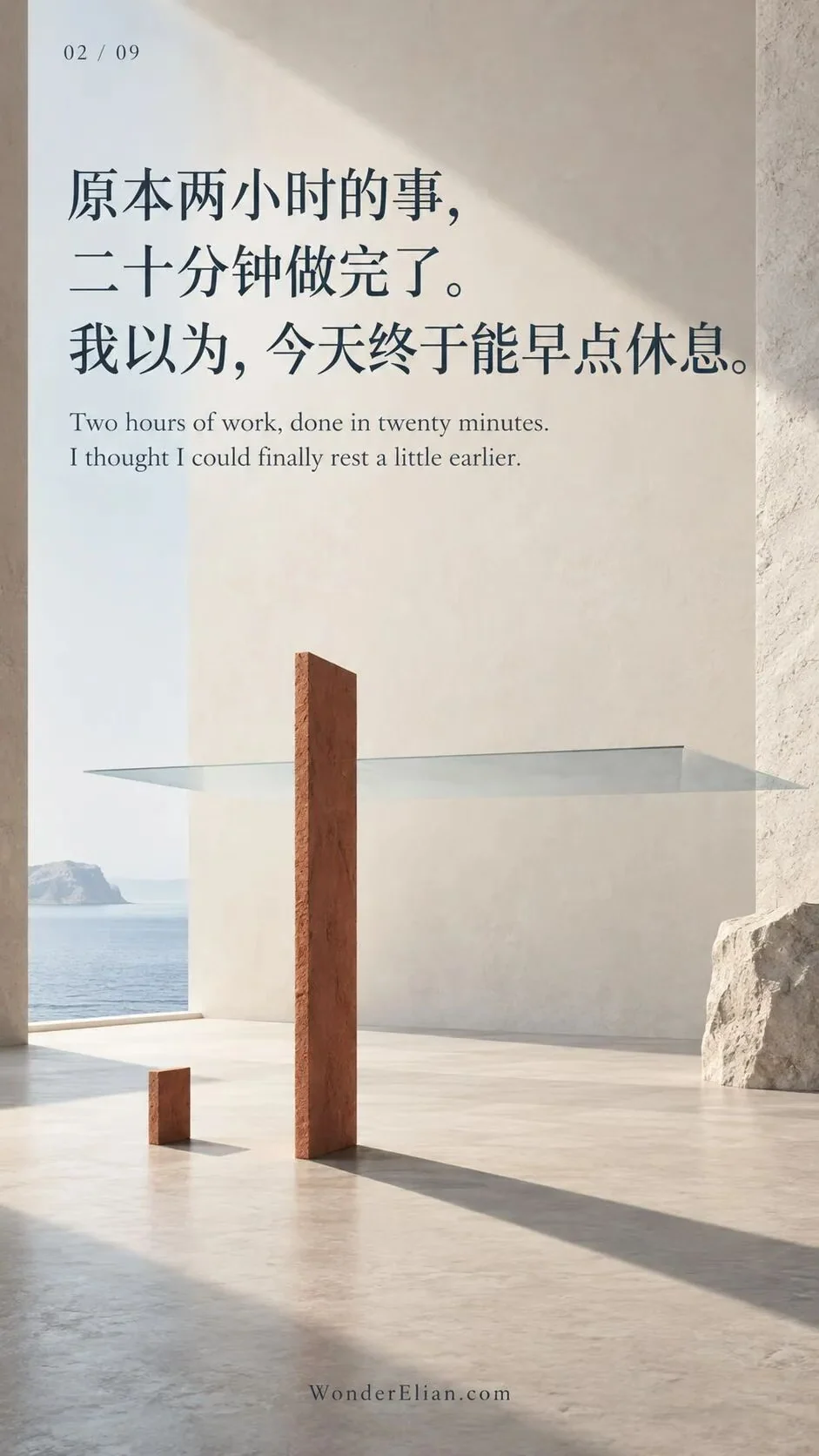
Then I opened three more tasks. With AI, I told myself, they should not be that difficult.

AI has genuinely lowered the cost of getting many kinds of work started. Drafting an article, organizing research, trying a first interface, or generating several visual directions all take less time than before. But when the cost of starting falls, the list of things we begin can expand just as quickly.
Ideas that once seemed too expensive in time now look as if they can be done “while I am here.” The two hours I saved do not automatically become rest. They become room for several more projects.
“I Can Do More” Slowly Becomes “I Should Do More”
Write another article, build another product, open another account. Each project is easier to begin and harder to contain.

“I can do more” slowly becomes “I should do more.”
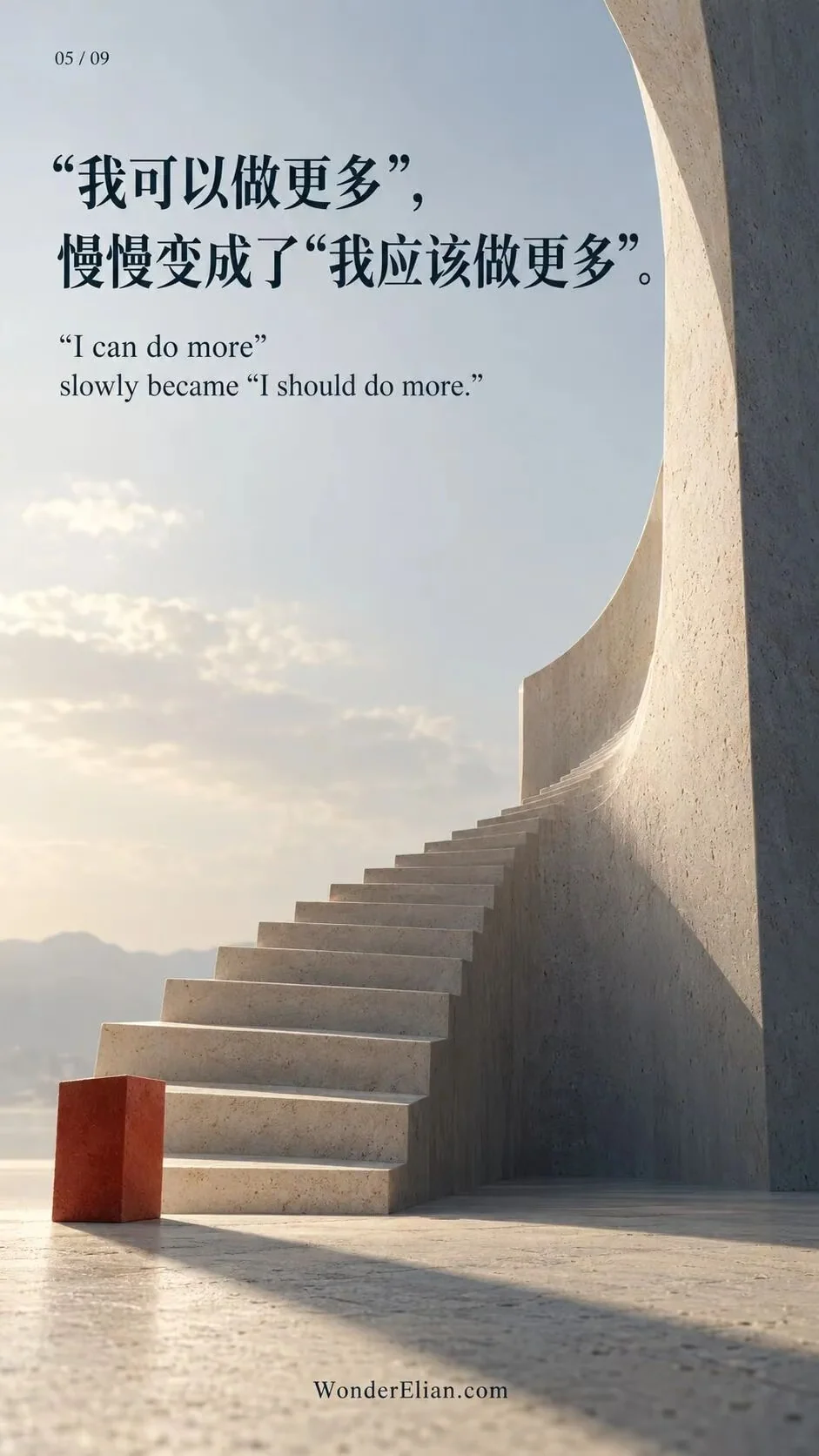
The tool increases capacity, but it does not decide what deserves to be done. When ten directions all become possible, choosing among them becomes a new kind of work.
AI can give me ten options at once. Choosing, revising, and stopping are still up to me.

This creates a quieter burden. Output becomes faster, but judgment, taste, tradeoffs, and responsibility are not automatically completed. Every new project adds another line to maintain and another promise that eventually needs explanation, correction, and closure.
The Most Exhausted Moment Is Not Always the Least Productive One
The hardest feeling is finishing a great deal and still believing, the moment I stop, that I have not worked hard enough.

When efficiency becomes the default expectation, completion no longer creates a sense of ending. It only pushes the standard farther away. If I work faster today than yesterday, tomorrow quietly arrives with the expectation that I should do even more.
Over time, improvement stops creating breathing room. It becomes a reason to raise the demands I place on myself.
What needs changing may not be the tool. I may need to define where today ends.
Before starting, decide where today ends. After finishing, keep the time you saved for the life you meant to live.

This is not about lowering the standard of the work. It is about making efficiency serve life again. Efficiency without a finish line turns the day into a runway that keeps extending under your feet.
May Some of the Time AI Saves Truly Belong to You
Here is a small agreement to try today: before beginning, decide where today will end. If AI saves you thirty minutes, keep some of that time for a walk, a meal, someone you love, or for doing nothing at all.
The tasks can continue to exist without all being completed today. New ideas can remain on a list before they become new commitments.
The scarce ability may no longer be getting the work done. It may be knowing when enough is enough. The meaning of AI saving time should not be limited to fitting more tasks into the same day. It should also help us recover a little life that has not already been scheduled.

Let the space created by efficiency appear in life too.
This series uses the 3D Abstract CGI style recommended by Xiazi Style Atlas. Branching, folding, and enclosing spaces represent the expansion of tasks. The composition gradually opens into more empty space, reflecting the room for life that we can choose to recover.