FIELD NOTE · 05
After a Serious Mistake, Can You Begin Again? Some Take Ten Years to Return Home; Others a Lifetime to Return to Themselves | The Odyssey
Mistakes carry a price, and choices have consequences. What truly answers the past is the person you choose to become from this day forward.
By Elian Yong · · 9 min read
THE LONG WAY HOME
Mistakes carry a price, and choices have consequences. Yet what truly answers the past is the person you choose to become from this day forward.

After watching The Odyssey, I sat in silence for a long time.
One thought kept returning:
No one is beyond error. We all make mistakes; heroes and gods are no exception.
Only later did I begin to understand that the cruelest thing is rarely the mistake itself.
It is this:
Mistakes carry a price, and choices have consequences.
Some prices pass in a matter of months. Others take years.
And there are mistakes that even a lifetime may not make disappear completely.
CHAPTER 01|We Think The Odyssey Is a Story About Coming Home
Odysseus leaves Ithaca to fight in the Trojan War, which lasts ten years.
When the war ends, he spends another ten years wandering at sea.
He meets storms, monsters, temptation, and death. Again and again, he pays for his pride, his desire, and his choices.
After twenty years, he finally reaches home.
When we are young, it is easy to read this as an adventure about a hero who survives every trial and returns in triumph.
But watching it now, I found myself thinking:
Perhaps The Odyssey was never really about one man defeating the world.
Perhaps it is about whether, after desire, pride, error, and loss,
a person can still find the way back.
And “back” does not mean Ithaca alone.
More than anything, it means:
back to yourself.

CHAPTER 02|After a Mistake, Are You Willing to Bear Its Cost?
We want the story of our past to feel whole.
We want every choice to have been right, every step free of error, every person who mattered left unhurt by us.
Real life is not like that.
At some point, all of us make the wrong judgment.
Youth, ignorance, pride, desire, fear—or simply one moment of weakness—can lead us to do something that cannot later be undone.
Some mistakes are small.
Some really do change a life.
I used to think that once someone understood a mistake, the next lesson was simply to “let it go.”
Later I learned that it is not so simple.
Real reflection is not the endless repetition of reassuring phrases:
“What is past is past.”
“I had no other choice then.”
“Stop thinking about it.”
When something has caused real consequences, those words may make the pain worse.
Reconciliation does not begin with denial.
It begins here:
I acknowledge that I did it.
I acknowledge that it had consequences.
I acknowledge that some things will never return.
Then comes the harder question:
How am I prepared to live now?

CHAPTER 03|Pain Is Not the Same as Responsibility
Over the years, I have slowly come to see something.
After a serious mistake, it is easy to confuse taking responsibility with punishing yourself.
We wonder:
If I stop suffering, does that mean I have forgotten?
If I allow myself to be happy again, am I betraying the past?
If my life becomes better, does that mean my remorse was never real?
So we build a courtroom inside ourselves.
We become both defendant and judge.
We put ourselves on trial again and again.
Sometimes a private conviction takes root:
If I keep suffering, perhaps I am still paying what I owe.
But eventually I understood:
Pain itself cannot repay the past.
Ten more years of sorrow will not make the event unhappen.
Punishing yourself ten thousand times will not turn time back.
The only honest answer to the past is the person you choose to become from this day forward.
Take the responsibility that is yours.
Repair what can still be repaired.
Offer the apology that is owed.
Make the change that is needed.
Then leave what can no longer be changed with time.
This is not escape.
It may be the most difficult form of responsibility there is.
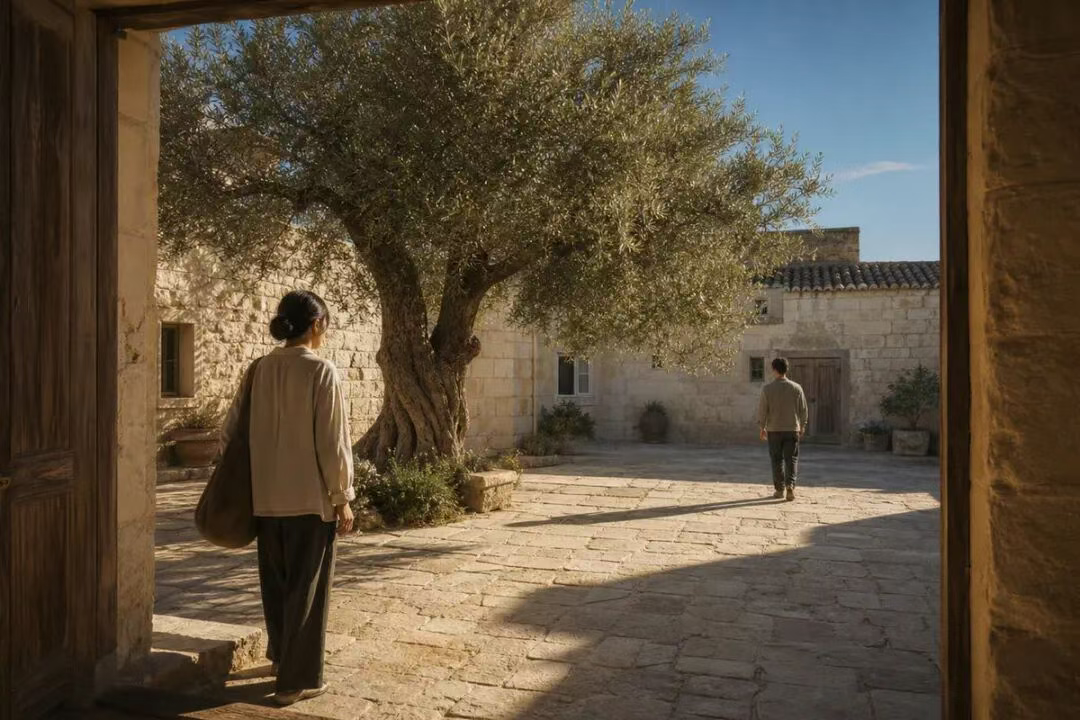
CHAPTER 04|Coming Home Does Not Mean Returning to Before
What moves me most in The Odyssey is that Odysseus really does return to Ithaca.
But it is no longer the Ithaca he left twenty years before.
His son has grown.
His wife has waited for twenty years.
Friendships, family, and the order of things have all changed.
And he cannot possibly be the man who first set out.
So returning never means:
At last, I have become the person I was before any of it happened.
That person no longer exists.
We often imagine that one day we will heal the past completely and become who we were before the mistake.
Life has no such button.
To return, in the truest sense, is this:
To carry everything that happened and come back to life anyway.
With the wound.
With regret.
With the price that was paid.
With choices that cannot be withdrawn.
And also with what has quietly grown over the years:
Understanding.
Restraint.
Humility.
Responsibility.
Compassion.
And, at last, the courage to begin accepting yourself.
CHAPTER 05|Making Peace with Yourself Is Not a Verdict of Innocence
I once misunderstood the phrase “making peace with yourself.”
I thought it meant finally persuading yourself:
“It was not really that serious. Even sages and gods make mistakes.”
I no longer believe that.
Real reconciliation with yourself is not a verdict of innocence.
It is the ability to hold two truths at once:
I really did something wrong.
And:
I can still go on becoming a better person.
Sometimes those two sentences are ten years apart.
Sometimes half a lifetime lies between them.
Some people spend their whole lives without completing the distance.
That is why the monsters, oceans, and wars are no longer what move me most in The Odyssey.
What moves me is that, after wandering for so long,
someone is still willing to go home.

CHAPTER 06|Some Take Ten Years to Return Home; Others a Lifetime
This morning, while talking about the I Ching, I found myself thinking about one character:
复 — return.
Return does not mean restoring everything to its original state.
It does not mean rewinding a life.
In the I Ching, “return” is the first small unbroken line reappearing at the very bottom after darkness has reached its depth.
The world has not become better yet.
Spring has not truly arrived.
Life has simply begun moving forward again.
I have grown increasingly fond of this image.
Because often what we need is not an immediate reversal from the worst fortune to the best.
It is simply this:
Come back a little first.
Accept yourself a little more today than yesterday.
Punish yourself a little less today than yesterday.
Choose one right thing again today.
Be willing to love someone again today.
Be willing to believe in life again today.
Perhaps rebuilding a life has always happened this way.
Not by turning the page all at once.
But by returning, inch by inch.
No one is beyond error.
We all make mistakes; heroes and gods are no exception.
Mistakes carry a price, choices have consequences, and growth means learning to bear them.
After the mistake, are you willing to acknowledge the cost?
After the loss, are you still willing to walk on?
After travelling so far, can you still recognize yourself?
I think this may be what The Odyssey finally left with me.
Accept the self who has already passed through desire, pride, error, and loss.
Not forgetting.
Not excusing.
Not pretending that nothing happened.
But reaching a day when you can finally say to your former self:
I will not deny you.
But I will not let you decide the rest of my life.
Some take ten years to return home.
Some take a lifetime.
And perhaps the longest odyssey of a human life is this:
To cross everything in the past that can no longer be changed, and finally find again who you are.
Know yourself.
Accept yourself.
Become yourself.
Live as yourself.
EPILOGUE|At WonderElian, Continuing the Way Back to Yourself
This is also why I made Yixiu, Bu'er, and Sanman.
Yixiu means pausing first: care for the body, settle the emotions, then continue.
Bu'er means not judging everything as right or wrong, good or bad: accept the peaks and the valleys, and embrace wholeness instead of chasing perfection.
Sanman means slowing down: take your time, and slowly become.
If you, too, are learning to know yourself, accept yourself, become yourself, and live as your real self, welcome to WonderElian.