Field Notes · 01
At 40, I No Longer Rush to Prove Myself: A Designer Built Seven Products with AI—and Learned How to Live Again
From big-tech design, serial entrepreneurship, and a long personal low to returning to design, AI, and independent creation.
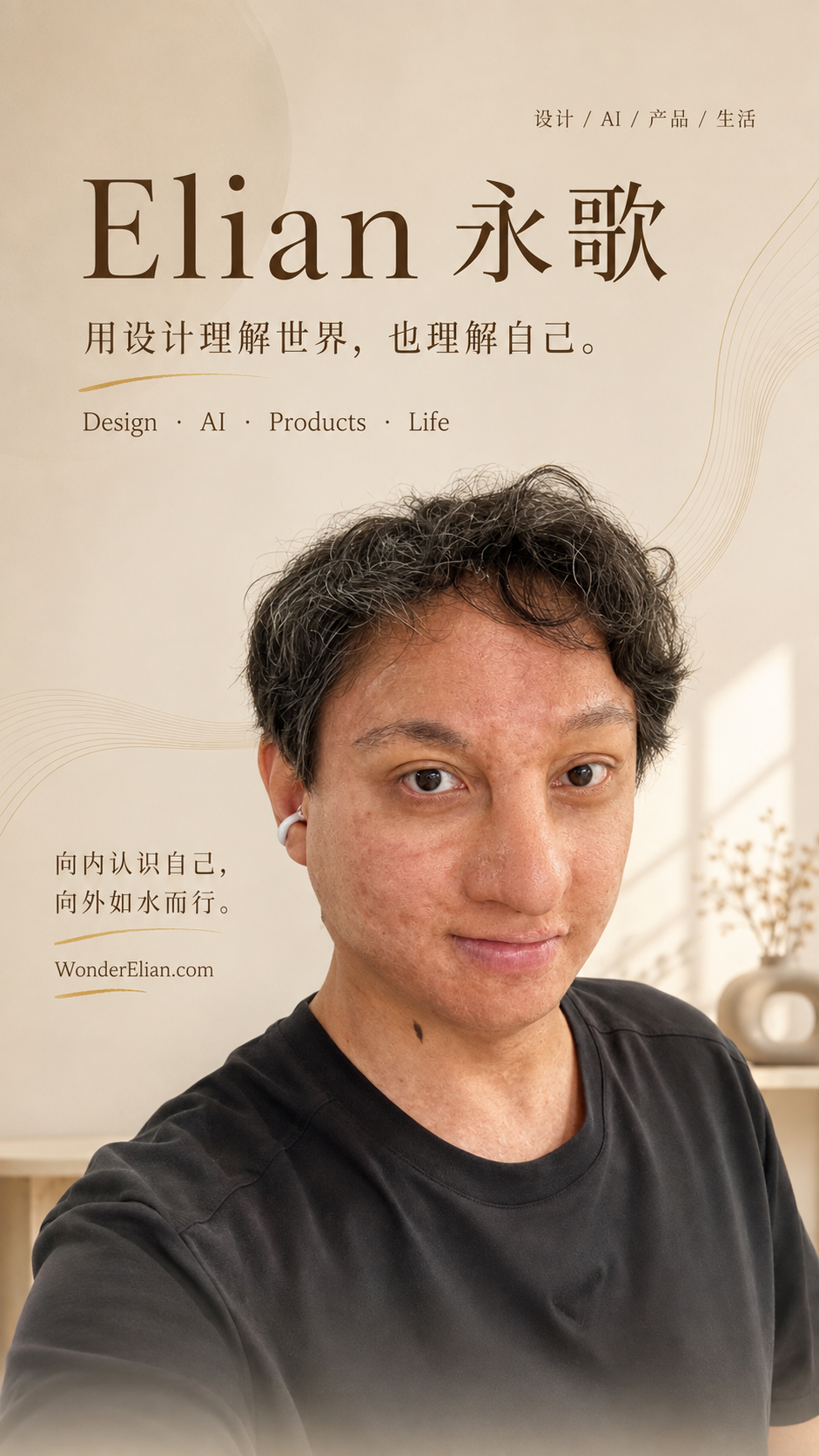
By Elian Yong · · 18 min read
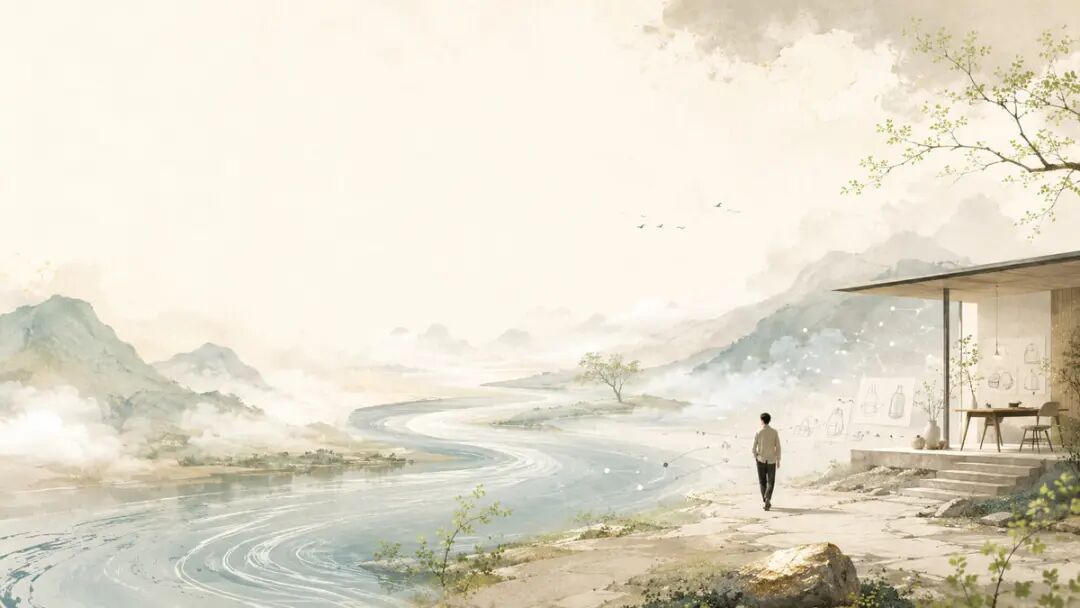
For a long time, my life seemed to revolve around one thing:
Proving myself.
Proving that I was good enough, that I could build a successful company, that I could make a lot of money, and that even after losing so much, I could still stand up again.
Now that I am 40, I feel less and less inclined to prove anything.
I want to do something else instead:
Know myself, accept myself, become myself—and then truly live it.
Last year, I returned to the design profession after a long time away and began working intensively with AI again. By day, I work on brand and visual design at a company. At night, I make products that genuinely interest me.
They now live together in a small world of my own:
WonderElian.com
The more I look at them, the more I realize that although they appear completely different, they are all doing the same thing underneath:
Making complex things clear and tasteful again.
CHAPTER 01|Before 35, I Was Always Proving Myself to the Outside World
My name is Yongge, and my English name is Elian.
I grew up in Xiangtan, Hunan. After living in Beijing, I eventually returned to Wuhan, Hubei.
At nine, an accident severely disfigured me. Over the years that followed, I underwent more than thirty operations.
That experience made me aware, very early, of something deeply important between people and the world: beauty.
I began studying art in fourth grade. Later, I entered Huazhong University of Science and Technology to study industrial design and architecture, then continued with a master's degree in design arts.
After graduating, I joined Meituan as a brand and UI designer.
At the time, I believed one thing very strongly:
If you work hard enough, you should always keep moving upward.
A better school, a better company, bigger projects, a higher income, a larger home.
These things once formed my definition of “success.”
Later, I began starting companies.
I worked on O2O, blockchain, and a project related to depression.
I experienced large rounds of funding—and projects falling all the way back to zero.
In those years, I gained many things and lost many things.
But what affected me most was not any particular business failure.
It was the realization that:
If you always need external results to confirm your worth, no matter how much you gain, you will find it difficult to become truly settled.
CHAPTER 02|After 35, My Life Lost Its Old Coordinates
Life then entered another long low period.
Major changes in work and family, struggles in both body and mind, and confusion—even despair—about the future all arrived at once.
The old method of “keep charging forward” suddenly stopped working.
For the first time, I began to face questions I had never made time to answer:
Why am I so afraid of failure?
Without a title, income, projects, or other people's judgments, who am I?
Am I living my own life, or merely trying to become the “right answer” in other people's eyes?
I used to think life's problems had to be “solved.”
Only gradually did I understand that some things are not there to be solved.
They need to be seen, understood, and accepted.
I began reading the Tao Te Ching again.
Not to become a teacher, and not to find an ultimate answer.
I simply wanted to understand:
How do I live as myself, and how can a person truly live with both self and world?
CHAPTER 03|At 40, I Returned to the Design Profession
Today, I work as a designer at an international laser-engraving company.
My work has gradually expanded from visual design into branding, websites, advertising, brochures, exhibition graphics, and product communication.
This work introduced me to design all over again.
I used to think of design as:
Making things look better and improving the user experience.
Now I would rather define it as:
Reorganizing complexity so people can understand it, believe in it, and feel willing to approach it.
An industrial machine contains many parameters, technologies, and selling points.
But the user may only look at it for a few seconds.
The job of brand design is to translate all that complexity:
What matters most?
What should be said first?
What needs to be seen?
How does technology become value?
How can a cold machine become a powerful, distinctive, trustworthy brand?
The longer I do this work, the more I realize:
Design may always have been my “one.”
Careers change.
Tools change.
AI changes.
But what I truly enjoy has barely changed at all:
Finding problems, creating order, organizing information, and expressing it again with clarity, beauty, and feeling.
CHAPTER 04|AI Did Not Pull Me Away from Design. It Made Me Love Creating Again
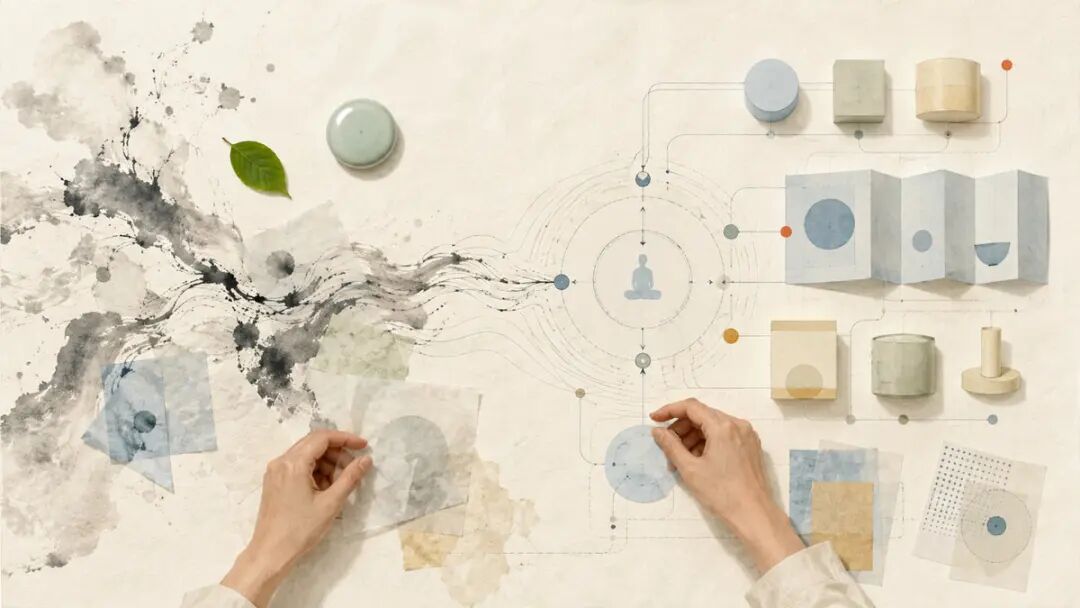
When ChatGPT 3.5, generative AI, and agents such as Codex appeared, I began experimenting almost immediately.
Images, video, writing, code, products, automation…
In the past, a designer who wanted to make a complete product needed engineers, product managers, operators, and a great deal of resources.
Today, what one person can complete has expanded dramatically.
For me, that is thrilling.
What draws me to AI is not simply “saving time.”
It moves a person from:
I can only do the parts I already know how to do
to:
I can finally make what is in my head real.
So after work, I began making many small products that seemed unrelated.
Little by little, they became WonderElian.
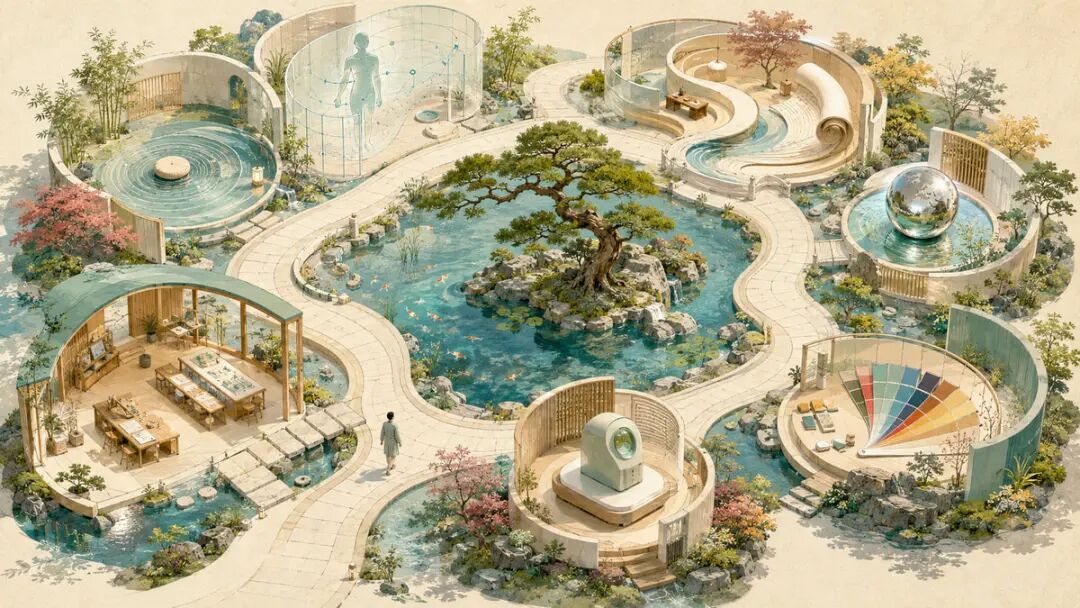
CHAPTER 05|WonderElian: Turning Interests into Things That Really Exist
WonderElian is not a startup.
At least, not now.
Nor is it a portfolio built to prove “how many things I can do.”
I prefer to think of it as:
Elian's personal world of making.
It holds my recent design work and a collection of independent products I have made with AI—products that will keep evolving.
Yixiu Meditation
This is a product about meditation, breathing, sound, and quiet.
It grew from a simple understanding that became clearer after my own low period:
Hold on. First care for the body, settle the emotions, and then continue.
We always want to solve life's problems immediately.
But often what a person really needs is to pause, breathe deeply, sleep, and let the body recover a little strength.
Bu'er · Know Yourself
This is the Human Design product I made recently.
I do not treat Human Design as a scientific conclusion, nor do I believe any system can tell someone “who you should become.”
What genuinely interests me is:
From what other angles can we observe ourselves? What might our personal operating manual—our factory settings—look like? Would life feel easier if we moved with them?
A new perspective does not always provide an answer.
But it may help us ask a question we have never seriously considered.
And knowing yourself often begins with a good question.
Wendao · The Slow Way
This is a product for reading the Tao Te Ching anew.
I use modern information design, visuals, and AI to reorganize words written more than two thousand years ago, bringing them closer to people living today. I especially enjoy exploring “what this can teach us now.”
While making it, I gradually arrived at four phrases that matter deeply to me:
Yixiu, Bu'er, Sanman, Rushui—rest, wholeness, slowness, and water.
Yixiu means caring for the body and the emotions first.
Bu'er means accepting that life contains both peaks and valleys.
Sanman means slowing down, taking your time, and becoming little by little.
Rushui means not clinging to a fixed identity, but preserving your core through change.
Together, they become one sentence:
Know yourself within. Move like water through the world.
Xiazi · Yesterday's World
I have always been intensely curious about the world.
AI, technology, business, culture, sport, design…
An enormous number of things happen every day.
What we often lack is not more information, but the ability to:
Reduce it, choose the eight hottest stories, and show visually what they actually mean.
That became Xiazi.
It reorganizes the world's daily news into stories that are clear, visual, and have a point of view.
It combines content, design, and my ongoing observation of the world.
Style Atlas
This is a product about visual styles, art, and learning design—made to help more people develop their aesthetic judgment.
After many years in design, I have come to believe that what matters is not memorizing the names of styles, but training one ability:
Seeing.
Why does one image feel comfortable?
Why does another composition feel powerful?
What is happening with color, proportion, rhythm, negative space, and visual focus?
What we call “taste” is not necessarily a mysterious gift.
It can be observed, analyzed, and slowly trained.
Brand & Growth Design
WonderElian also holds my professional work.
I do not want to set “work” against “personal creation.”
This is my most honest design training ground right now.
Brand strategy, websites, brochures, advertising, exhibitions, product visuals…
Every day, these projects make me confront a real commercial question:
How can design genuinely help a product be understood, trusted, and chosen?
They also document my gradual movement from “visual designer” toward brand design.
WonderElian OPS
As I made more things, a new question appeared:
How do I manage and operate them?
Projects, data, content, experiments, operations, ideas, and next actions began to scatter across different places.
So I built myself an AI-powered automated operations system.
It is not designed to turn life into KPIs.
Quite the opposite.
I want the system to take over repetitive, trivial, automatable work, leaving me more time for the things that truly require judgment, taste, and creativity.
This is also how I understand AI today:
Not as a way to make people more like machines, but as a way for machines to carry more of the work machines should do.
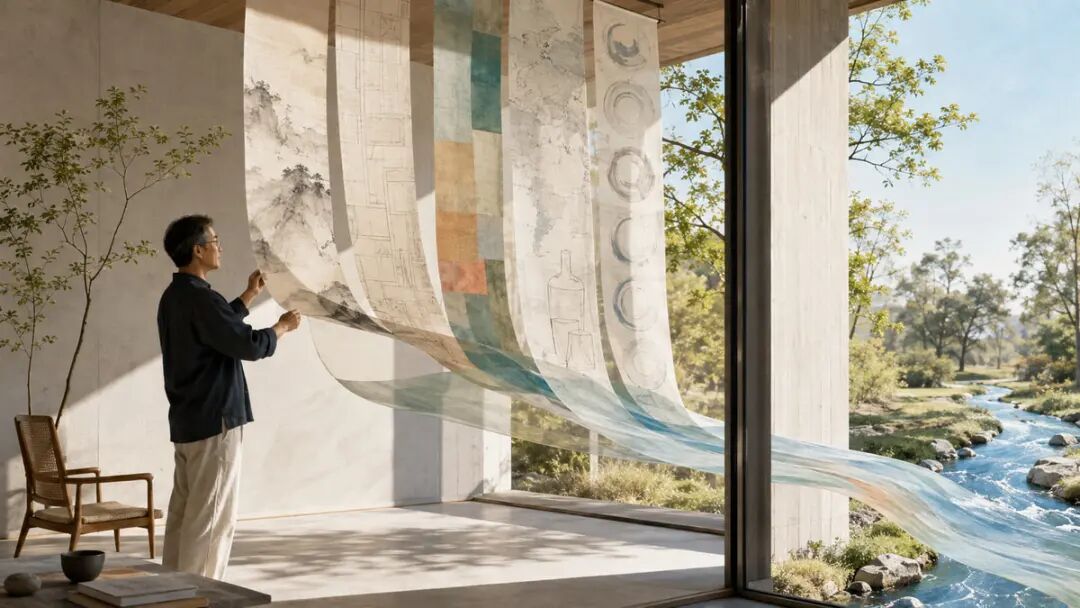
CHAPTER 06|These Things Look Scattered, but They Have Always Been the Same Work
Friends sometimes ask:
What exactly are you doing?
Meditation, Human Design, the Tao Te Ching, art styles, industrial branding, AI systems…
Isn't it all too scattered?
I used to worry about that too.
I felt that a person needed a perfectly clear label:
Designer.
Entrepreneur.
AI creator.
Product manager.
Blogger.
Over time, I realized that perhaps I do not need one.
The subjects may be different, but the way I approach them is remarkably consistent.
With an industrial machine, I ask how complex technology can be explained clearly.
With the Tao Te Ching, I ask how ancient words can re-enter modern life.
With Human Design, I ask how a complex system can become a visual structure ordinary people can understand.
With news, I ask what deserves to be seen in an immense flow of information.
With art, I ask how a vague “feeling” can become a visual language that can be learned.
If I had to name the common thread now, I would say:
I like to reorganize things that are complex, abstract, or cold, then use design, AI, and products to make them clear, beautiful, and warm.
Design is my language.
AI is a new tool.
Products are how ideas become real.
And curiosity is probably the force behind it all.
CHAPTER 07|I Still Feel Anxious. I Just No Longer Demand an Answer to Life
Turning 40 did not suddenly make me perfectly clear-minded.
I still have pressure at work.
A mortgage.
A child.
I still worry about the future.
I still wonder what would happen if my job disappeared one day.
When I see other people succeed as entrepreneurs, I still feel envy.
As AI develops faster and faster, I still wonder whether my abilities might one day stop mattering.
None of these questions has disappeared.
What has changed is this:
I no longer demand that I understand the next ten years of my life today.
In the past, anxiety made me rush to find a “second growth curve.”
Now I would rather do my current work well, deepen my brand-design practice, and use evenings and weekends to make the ideas that genuinely create a response in me.
I am not rushing to monetize everything immediately.
But I am not simply playing without direction either.
With every product, I hope to leave something behind:
A body of work.
A method.
A new capability.
A real experience.
Or simply a deeper understanding of myself.
Take it slowly.
See where these things eventually lead me.
CHAPTER 08|From “Proving Myself” to “Becoming Myself”
If I were to summarize the first forty years of my life, I would divide them into two stages.
In the first half, I kept learning:
How to become a more impressive person.
In the second half, I want to learn:
How to become myself.
That does not mean giving up effort.
Nor does it mean lying flat.
On the contrary, I still design, experiment with AI, build products, work, and support my family every day. I still want a better income and more choices.
What has changed is the motive behind the effort.
Before, it was:
I need to prove that I can.
Now, it is closer to:
I genuinely want to do this, so I want to do it well.
The two may look similar from the outside.
But they feel completely different in the body.
CHAPTER 09|WonderElian May Stay with Me for a Long Time
I do not know what WonderElian will eventually become.
Perhaps it will remain a personal website.
Perhaps some of its products will slowly grow.
Perhaps something I cannot imagine today will appear in the future.
That is all right.
I hope it always keeps a little “Wonder.”
Curiosity.
Surprise.
Miracle.
An interest in the world.
And a willingness to keep making things.
The name Elian carries a private meaning for me:
I hope I can “live as a ray of light.”
When I was younger, I thought light meant brilliance, success, and being seen by many people.
My understanding has changed.
Light does not have to be dazzling.
It can simply mean:
Making one thing with care.
Offering a little help when someone needs it.
Explaining something complex clearly.
Being kinder to my family.
Being kinder to myself.
And after living through darkness, still choosing to believe that beauty exists in life.
WonderElian therefore has no grand ultimate mission.
It simply records how a 40-year-old designer continues to use design to understand the world, uses AI to make things that genuinely interest him, and learns again how to live.
Know yourself within.
Move like water through the world.
Then, slowly, become yourself.