Field Notes · 09
Apple Now Lets Multiple Apps Share One Subscription. Is This a New Opportunity for One-Person Companies?
One subscription, a family of products, and a long-term relationship: the real change may be how small developers build a body of work.
By Elian Yong · · 8 min read
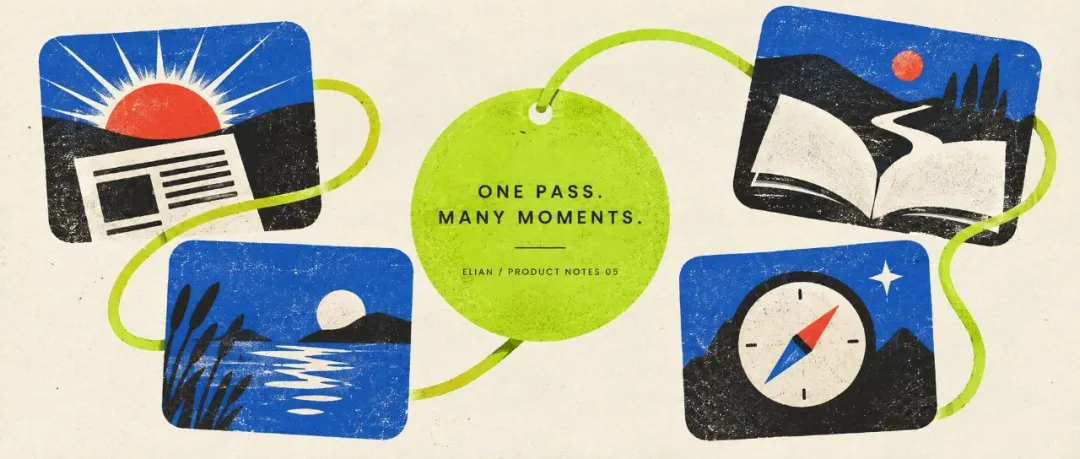
If one person builds four apps, what do they usually end up with?
Four feature sets, four release plans, four pricing pages—and a more exhausted version of themselves.
So when I saw Apple's newly announced subscription capabilities, my first thought was not, “At last, I can charge people several times.”
I thought about something else: for the first time, several small products made by one person could be run as one coherent service.
For a one-person company, that may be more interesting than adding another payment button.
01 / ONE PASS · MANY MOMENTS|What exactly did Apple change?
On September 16, Apple announced Bundles and Suites for iOS 27 on its developer website.
The names sound a little like different hotel breakfast packages, but the distinction is straightforward.
A **Bundle** combines multiple auto-renewable subscriptions into one purchase. It can include subscriptions from one developer across one or more apps, or bring together apps from different developers. Apple says a multi-developer Bundle can include up to five developers.
A **Suite** works more like a pass: one developer can use a single subscription to give people access across a family of apps, covering as many as fifteen apps.
During purchase, the App Store shows the apps included in the subscription, making them easier to download and use.
This is not yet a switch developers can flip to publish an instant “all-in-one package.” They must submit a request and, if approved, work with Apple to complete the configuration. Apple says the capabilities are planned for later in 2026 on iOS 27, iPadOS 27, macOS 27, and tvOS 27, and require StoreKit 2.[1][2]
So this is an announced path worth preparing for, not a cheque that can be cashed today.
02 / ONE PASS · MANY MOMENTS|Can one subscription accompany someone through an entire day?
The announcement made me look again at the products I have built.
When I wake up, I open Xiazi to see what happened in the world yesterday.
When I want to nap at noon, I open Yixiu Meditation and fall asleep to nature sounds. If I wake too early at night, I listen again.
When I have a little time, I read a chapter of the *Tao Te Ching* in Wendao. I especially like the parts about what a passage can teach us and how it returns to daily life, because after reading the original and its translation, I still want to ask: what does this have to do with me today?
When I want to understand myself, I open Buer and treat it as a personal operating manual I can browse slowly.
They look like four different apps: news, sound, classic reading, and self-understanding.
But from farther away, they serve the same person and address related questions: how to see the world more clearly, and how to see oneself more quietly.
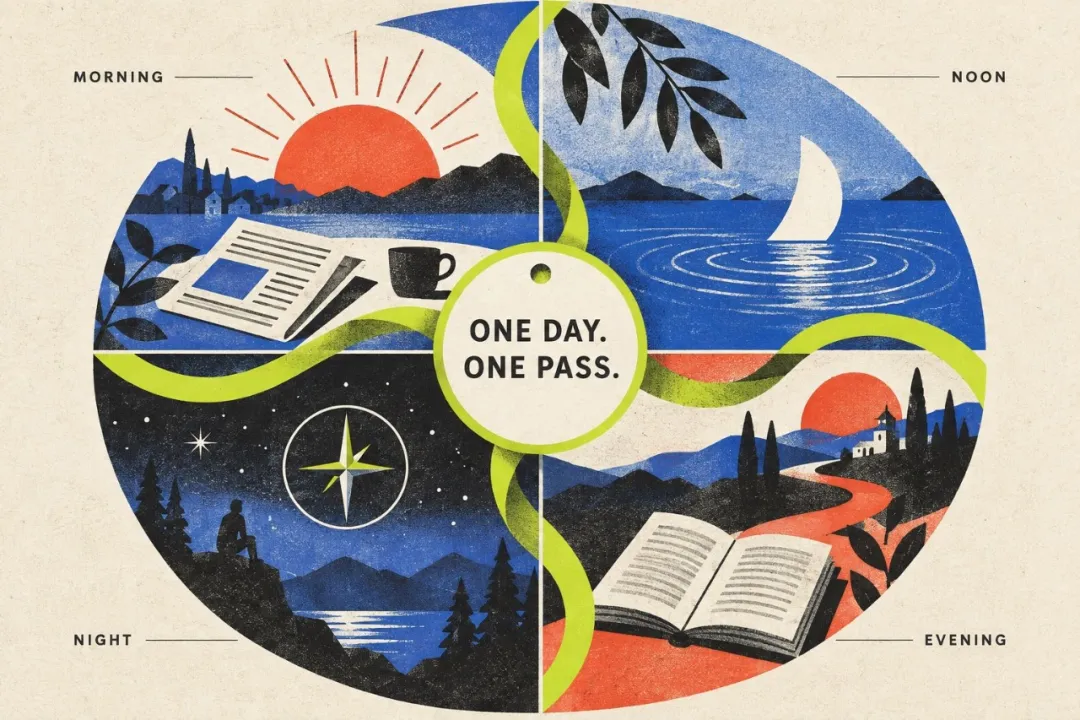
This is a product idea. WonderElian has not enabled an Apple Suite, and these apps do not currently share a subscription.
Apple's new capability does, however, give this idea a more concrete product form. A customer could buy more than one feature; they could subscribe to a set of experiences that a creator keeps developing over time.
03 / ONE PASS · MANY MOMENTS|Selling “more apps” is probably a bad idea
At this point, it is easy to begin a dangerous addition exercise:
If one app costs RMB 18, should four apps together cost RMB 68?
If all you do is staple four price lists together, customers will not feel they are buying a service. They will only feel that the checkout page got longer.
For a multi-app subscription to make sense, I think it must answer at least three questions.
First, are the apps for the same people?
Second, do they share a common promise?
Third, does each app have its own clear moment of use?
One belongs to the morning, one to bedtime, one to reading, and one to reflection. People know when to open each app and why they belong to the same family.
That is a product portfolio.
Otherwise, it is like putting a bowl of noodles, an umbrella, and an online English class into one breakfast package. Each may be useful, but it is hard to explain why they should be bought together.
04 / ONE PASS · MANY MOMENTS|The opportunity is not suddenly owning fifteen apps
The fact that an Apple Suite can cover up to fifteen apps does not mean a one-person company should stay up all night making fifteen icons.
Maintaining fifteen apps no one wants is like keeping fifteen plants you have forgotten to water. Scale only makes the guilt larger.
The real opportunity is a change in the operating model.
Small developers have often placed all their hopes on one app: one launch, one store page, one subscription curve. If the product does not work, it can feel as though the entire company has failed.
If several products serve the same people, a Suite may let a creator cultivate a long-term relationship instead of repeatedly searching for the next group of strangers.
Someone may discover you through Yixiu, then begin reading Wendao. Someone else may arrive through Xiazi and gradually discover products that help them become still.
That does not guarantee conversion, and it does not mean people will pay for the whole portfolio. But it introduces a new possibility: one product creates the first meeting, while the others continue to fulfil the same promise.
For a one-person company, that feels closer to a business one can care for over time than trying to turn every app into an independent hit.
05 / ONE PASS · MANY MOMENTS|A shared subscription also shares every problem
Once one pass connects several products, their strengths are amplified—and so are their problems.
If one app goes without updates for too long, customers will not only think that app has lost value. They may begin to doubt the entire subscription.
Accounts, entitlements, privacy, support, and cancellation can no longer be handled as isolated pieces. Customers do not care about your technical architecture. They ask one question: “I subscribed, so why can I not open this?”
The more practical issue is maintenance.
For a one-person company, the scarcest resource is usually attention rather than ideas. More products bring more testing, releases, content, feedback, and compatibility work.
A shared subscription is therefore not a way to cram more things into one price. It asks the creator to care for an entire product family with greater consistency.
That may be harder than selling four products separately.
06 / ONE PASS · MANY MOMENTS|If it were me, I would begin with three steps
First, before designing a package, identify which product people truly use repeatedly.
I would ask myself: if I could keep only one tomorrow, which would I miss most? If I could recommend only one to a friend, could I clearly explain the problem it solves?
Second, find the line the products genuinely share.
They should not be grouped merely because I made all of them. A common author is an identity card, not a reason to buy. People need to see how the products work together to improve their lives.
Third, decide which capabilities should be shared.
It could be one set of membership benefits, a content service, cross-app favourites and records, or simply an easier pricing choice. The more you share, the more responsibility you take on behind the scenes.
Make one thing worth subscribing to before bringing in the second product.
07 / ONE PASS · MANY MOMENTS|What I want to build is a body of work
Apple's update will not create a one-person company automatically.
What it changes is how a small developer can imagine their products.
Previously, we finished one app and then thought about the next. They sat like separate works on a table, each with its own name, icon, and price.
In the future, they might read like a book that continues to be written: every app is a different chapter, but they belong to one author and serve one way of living.
See the world in the morning, become still at noon, read a chapter in the evening, and slowly understand yourself.
If these products one day deserve a place in someone's life for the long term, that person will be subscribing to more than four apps.
They will be subscribing to the kind of life a creator has chosen to serve over time.
That is the opportunity I see for a one-person company.
Sources and notes · Checked September 18, 2026
[1] Apple Developer: Get your subscriptions ready for iOS 27
https://developer.apple.com/news/
[2] Apple Developer: Create Bundles and Suites for auto-renewable subscriptions
https://developer.apple.com/app-store/subscriptions/bundles-and-suites/
The discussion of product portfolios and WonderElian reflects personal judgment and a product concept. It does not mean these products currently share a subscription, and it makes no promise about revenue or conversion. The illustrations were created with AI assistance.