Today, the question “How does Sisyphe Bookstore make money?” brought bookstores back into the public conversation.
Many answers point to coffee, cultural products, events, shopping-mall leases, and the efficiency of running a chain. All of those matter. But they leave another question unanswered: when ebooks are more convenient, online stores are cheaper, and short videos are faster, why do people still choose to walk into a bookstore?
This time, I will write a little less and let nine images tell the story first.


How Sisyphe Makes Money: Turn a Purchase into a Stay
Commercially, a modern bookstore can no longer depend on the margin from books alone. Sisyphe’s official website presents a business that includes book retail, Vector Coffee, Uptrend cultural products, children’s reading through 72 Reading, content programs, and an online platform.
The logic of that combination is straightforward. Books give the space a clear cultural identity. Coffee extends the visit and creates a more frequent purchase. Cultural products, children’s reading, and events create more reasons to enter. A chain can reuse experience in location selection, curation, supply, and store operations.
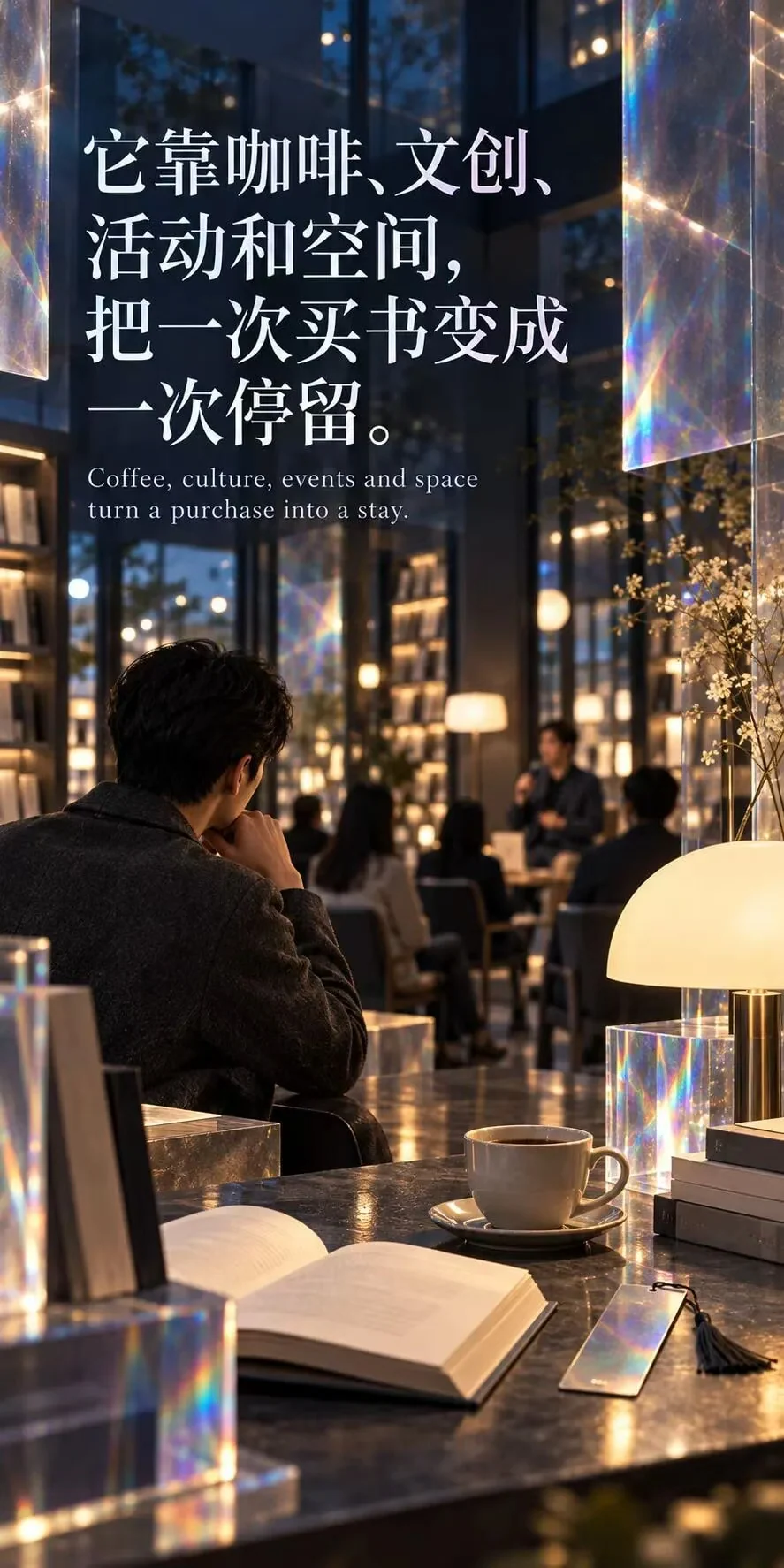
Public sources do not provide a breakdown of Sisyphe’s revenue, costs, and profit across books, coffee, cultural products, and its other activities. This is therefore an interpretation of the business logic visible in its public formats and industry information—not a reconstruction of an internal income statement.
Physical-store book sales remained under pressure in 2025. Bookstores have been looking for ways to continue through mixed-use formats, reading activities, and public cultural services. Selling books still matters. It is simply no longer the whole answer.

Why Bookstores Survive: Encounters Beyond the Algorithm
Buying a book online usually begins with a clear goal: type the title, compare the price, and place the order. It is efficient, and the path is short.
Part of a bookstore’s value comes from the opposite quality. You can walk past a shelf without a goal, be interrupted by an unfamiliar title, or stop in a section you would never have searched for.
Algorithms are good at using the past to predict what you may like next. Shelves place unrelated things in the same physical space, allowing chance encounters to keep happening.

That does not make bookstores superior to algorithms. They meet two different needs. One helps you find what you want quickly. The other lets you spend some time without knowing what you are looking for.
What a bookstore really offers may be an encounter outside the algorithm.
A Third Place for Adults Does Not Have to Be Loud
Home is often described as the first place, and work as the second. Bookstores, cafés, parks, and community spaces can become a “third place” outside both.
For many adults, that place does not need to be busy or filled with scheduled activities. It may only need a table, a little light, and some time in which nobody asks you to leave.
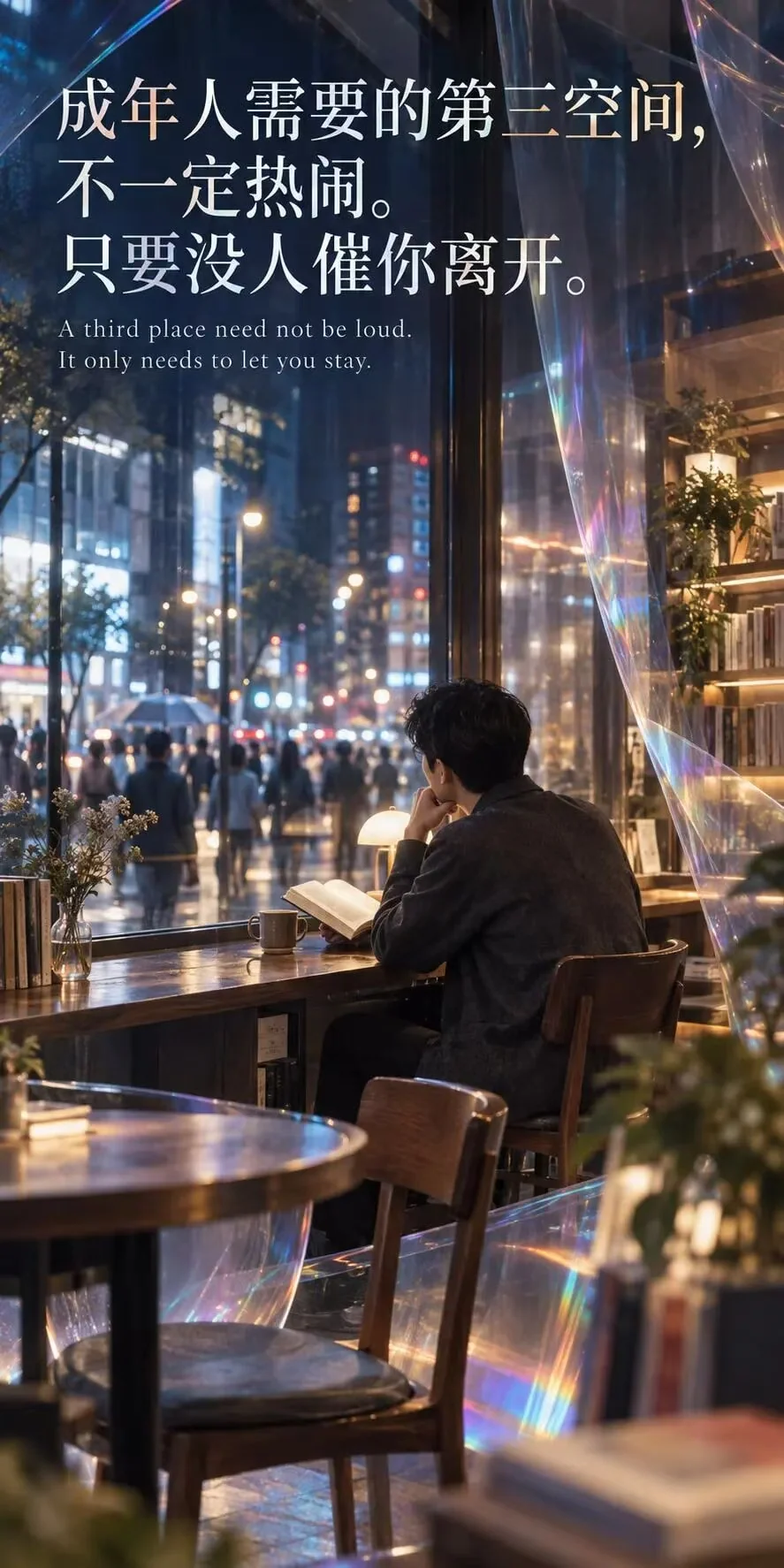
That is also why coffee matters inside a modern bookstore without replacing the books. Coffee turns staying into a purchase the business can sustain. Books give that stay a cultural direction.
If only the coffee remains, the place is no longer a bookstore. If only the photo opportunity remains, it is unlikely to last.
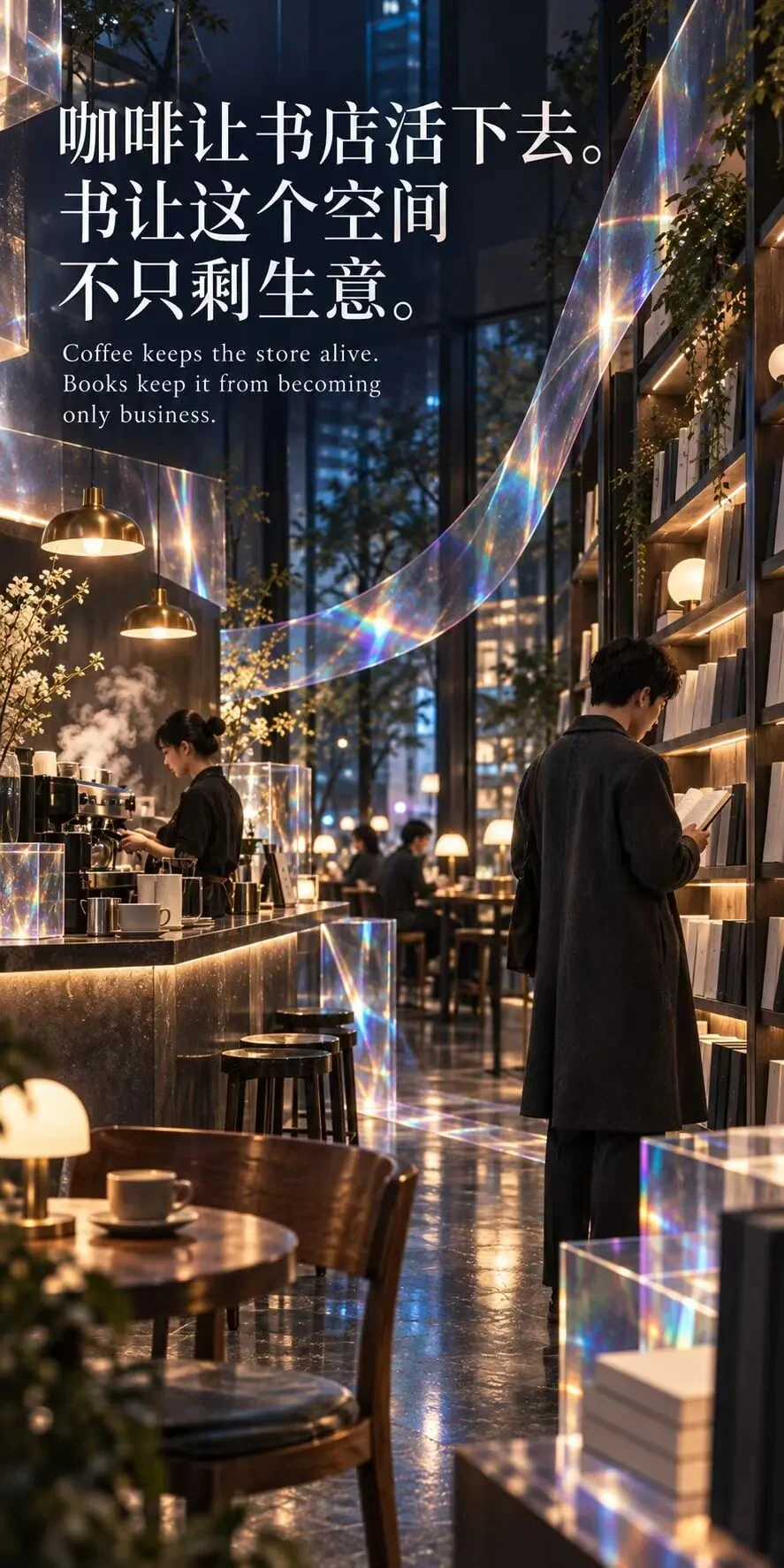
A good mixed-use bookstore does more than put several kinds of merchandise under one roof. Its books, space, drinks, events, and service must answer one question together: why would someone want to return?
Keep One Slow Light On for a Fast World
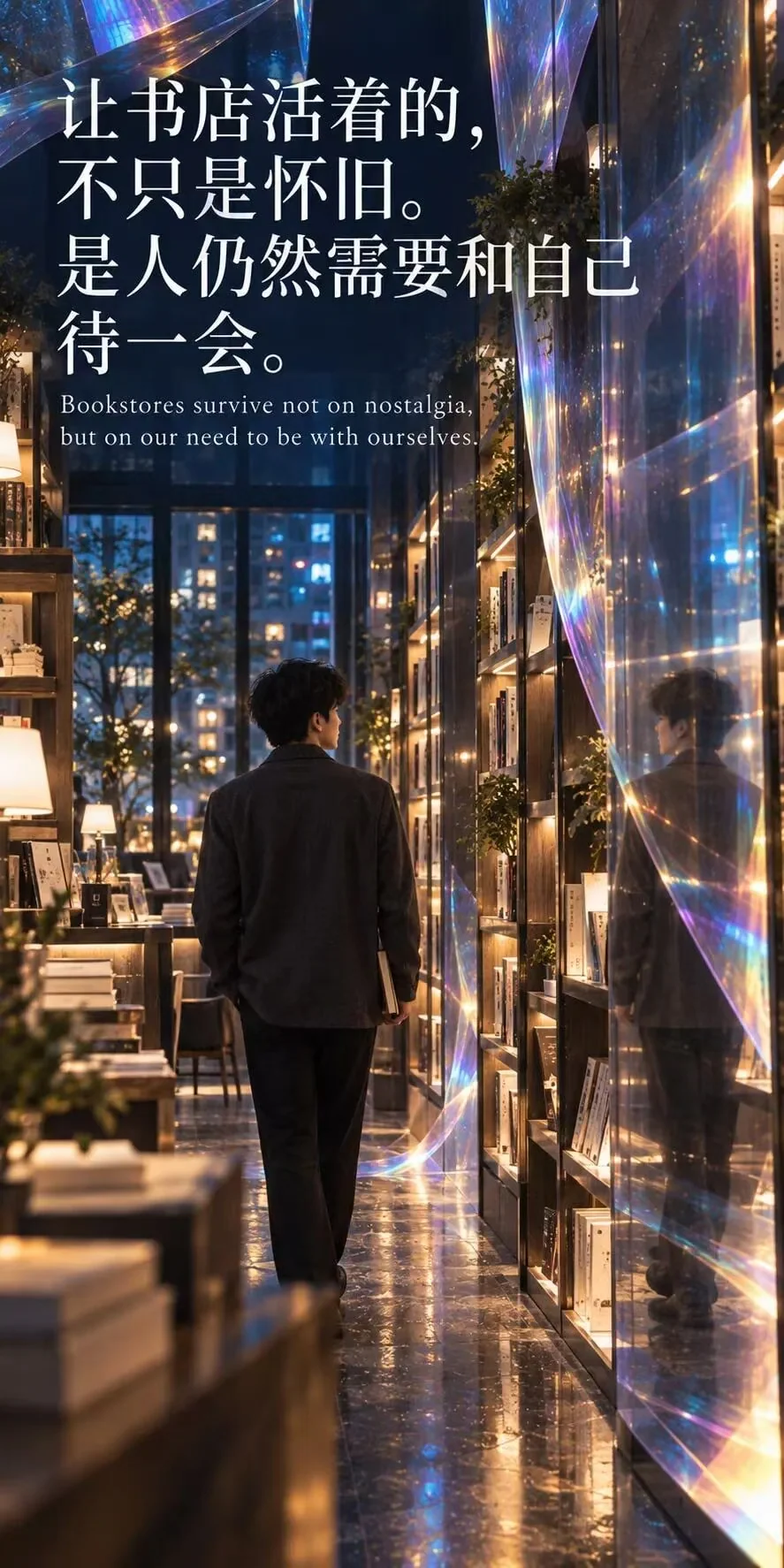
Bookstores do not survive on nostalgia alone.
People still need to step away from work and screens and spend time with themselves in a place that is public without feeling crowded. They may read a few pages, or accomplish nothing at all.
So why are bookstores still here?
Because people do not only need a faster way to buy a book. We also need a place where we can become a little slower, more open to chance, and more quiet.
In an age increasingly organized around efficiency, keeping a light on for that “unproductive” pause is a form of value in itself.
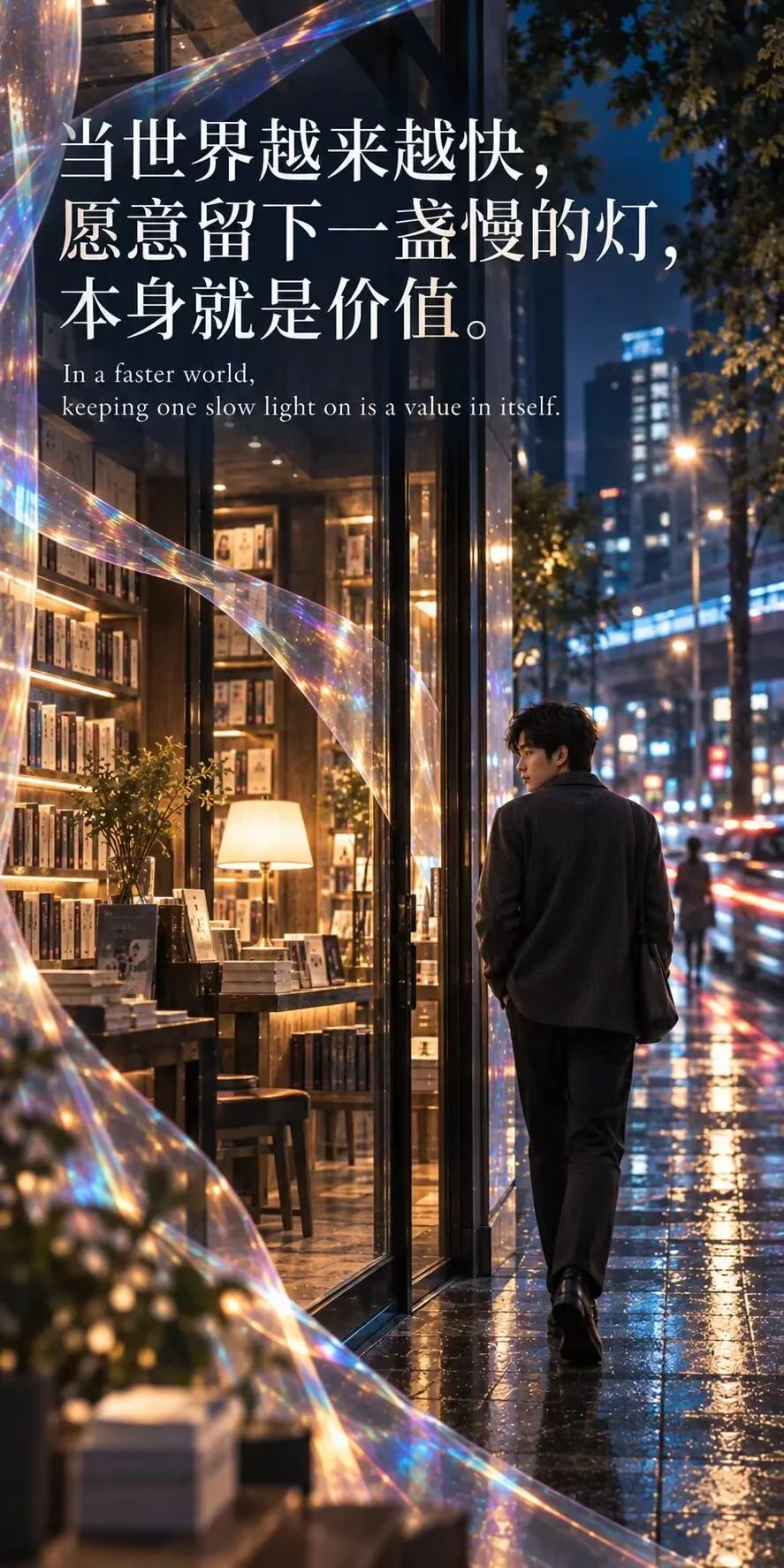
This series uses the Holographic style recommended by Xiazi Style Atlas. Iridescence, transparent film, and refracted light express the slow time that still survives inside the commercial world.
Sources
- Sina Finance: How Does Sisyphe Bookstore Make Money?
- Sisyphe Bookstore official website
- National Press and Publication Administration: Basic Statistics of China’s Press and Publishing Industry in 2025
- People.cn: Physical Bookstores Transform into Urban Cultural Spaces