
Imagine an ordinary moment.
You wake at three in the morning. Your mind is still racing, but you do not want to look at a screen. You say only:
“Play Morning Forest Birds in Yixiu, and stop after ten minutes.”
Your phone does not ask you to unlock it, find an icon, open an app, enter the sound library, and tap Play. It understands the situation, finds Yixiu, calls the right sound, sets the duration, and lets the room grow quiet again.
You have barely “used an app,” yet Yixiu has done its most important job.
That may be the real change brought by the new Siri: people may no longer need to open an app to receive its value.
The Danger Is Not That Apps Disappear, but That Your App Has Nothing AI Can Call
Apple’s new Siri AI, announced on September 14, is about more than making conversation feel human. It can begin to understand personal context, onscreen content, and world knowledge, then carry out cross-app tasks through system-level actions.
Apple’s examples include finding an event a friend mentioned in Messages, locating a recipe in Mail and adding its ingredients to Reminders, or asking Siri to use a third-party app to write an email, search homework, or save a restaurant.
The key term behind this is App Intents.
In simple terms, an app used to give the system an icon and a set of screens. Now it also needs to tell the system:
- what actions it can perform;
- what content it contains;
- what conditions an action requires;
- what result it returns when complete.
Apple’s developer documentation defines an App Intent as a capability of an app and the code that performs it. Once an app’s actions and data are structured, Siri, Spotlight, Shortcuts, and other system experiences have a chance to understand and use them.
The new Siri has not announced the death of the app. It has simply posed a slightly cruel question:
If a user never enters your home screen, what is left of your product?
An App Is Changing from a “Place” into a Set of Capabilities
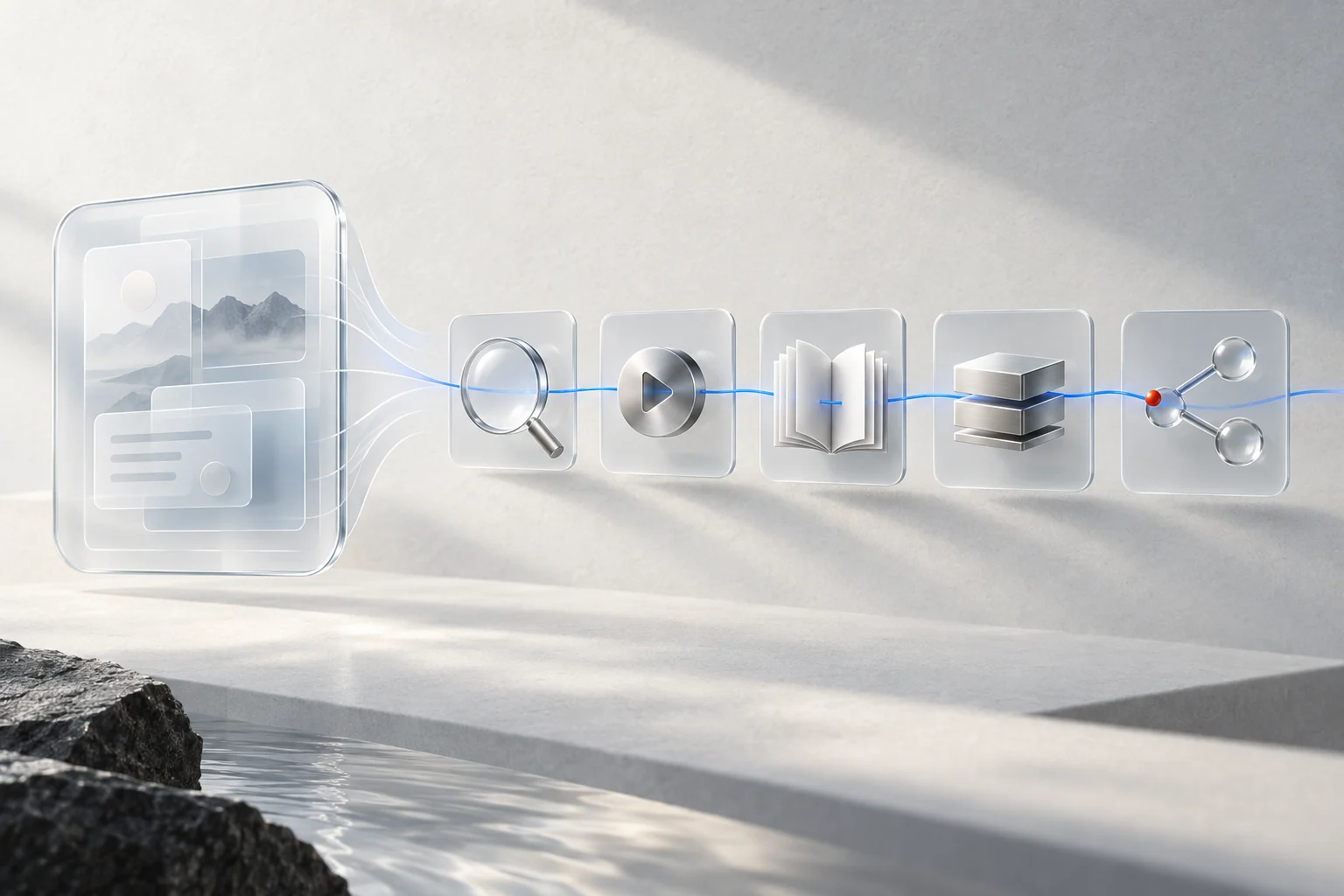
We used to think of an app as a place. A user arrived at the home screen, then followed the navigation we designed, layer by layer, until reaching the function they needed. Product managers drew screens, designers arranged entry points, and growth teams tried to make people open the app more often.
An AI assistant behaves more like a dispatcher. The user states an intention directly; the system finds suitable capabilities and combines them into a result. Home screens, navigation bars, and buttons will not vanish immediately, but they are no longer the only entrance.
That changes the first question in product design.
We used to ask: What should the home screen contain?
Now we must also ask: If a user says only one sentence, what can my product do for them?
A meditation app can offer “play Morning Forest Birds,” “start three minutes of breathing,” and “stop after ten minutes.”
A reading app can offer “continue today’s chapter,” “open the everyday practice section,” and “save this insight.”
A news product can offer “tell me the most important change in AI yesterday,” “save this cross-border case,” and “open the English source.”
These sentences look small, but they are far more concrete than “build an AI meditation app” or “build an AI reading app.”
Nouns describe what product you made. Verbs explain why someone needs it.
The Stronger AI Becomes, the More Valuable Real Apps Become
It is natural to ask: if AI can understand, search, and act, why build an app at all?
Because understanding an intention is not the same as possessing everything required to complete the task.
AI can understand “help me settle down for ten minutes,” but it still needs dependable audio, playback controls, and personal preferences. It can understand “continue the chapter I read yesterday,” but it needs to know where you stopped, what you saved, and which content you are allowed to access. It can understand “subscribe me,” but payment, permissions, account state, service delivery, and support still belong to a real product.
The apps that become more valuable will usually own at least one of these:
- distinctive, trustworthy content;
- personal state that accumulates over time;
- professional capability that completes a task reliably;
- permissions and trust a user is willing to grant;
- clear boundaries for transactions, delivery, and responsibility.
The vulnerable app is the other kind: a generic interface whose value depends entirely on forcing people to open it. When the system can perform the same capability directly, that entrance advantage grows thin.
That is why I believe the AI era does not make apps unnecessary. It makes it more necessary to turn an app into a real product.
Designers Do Not Lose Their Value; the Object of Design Changes
If people no longer pass through screens every time, does design become unimportant? Quite the opposite.
Designers used to arrange visible paths. Now they must also design an invisible one: how the system understands an action, when it asks for parameters, which operations require confirmation, how a failure is explained, and when the user should return to the app.
“Play ten minutes of audio” may run directly. “Buy an annual subscription” should require clear confirmation. “Give advice based on my profile” should explain what data is being used and let the user refuse.
A callable action must answer at least five questions:
1. How would a user say it naturally?
2. What parameters does it need?
3. When may it run immediately?
4. When must it ask for confirmation?
5. When information is missing or the action fails, how does it return safely to the app?
These are still questions of product judgment, interaction design, brand expression, and trust. AI has not reduced the number of design problems. It has moved some of them outside the screen.
If You Are Building an App Now, Start by Writing Ten Verbs
If I planned a product again today, I would put aside the home-screen wireframe and first write down the ten actions most worth calling.
Do not begin with “community, membership, AI assistant, data center.” Begin with: play, continue, find, explain, save, compare, remind, share, buy, stop.
Then inspect each one. Does it solve a real problem? Is its result dependable? What data does it require? Even if the app never opens, can the user tell what happened?
For a one-person company building both an app and a web experience, I would give each a different role:
The web is for discovery, understanding, and sharing. The app is for personal state, continuing service, subscriptions, and deeper system connections.
Global expansion no longer has to mean translating one enormous app into English. You can first validate a cross-language need on the web, then let the app hold the parts that require a lasting relationship and system capabilities.
This Is Not Yet Universal, but the Direction Is Visible
One boundary matters. As of September 23, 2026, Siri AI was still rolling out from an English beta. Apple said the relevant features were not yet available in China, and the initial European release also had restrictions.
This article is not claiming that every user will control every app with one sentence tomorrow.
What interests me is the product direction it reveals: the operating system is moving from helping users find apps to helping them call capabilities.
Independent developers and one-person companies can begin organizing those capabilities now instead of rebuilding everything after the entrance changes.
People may remember less and less about which layer contains a function. But they will remember: when I feel restless, this helps me settle; when I feel lost, this helps me continue one chapter; when I want to understand the world, this finds yesterday’s most important change.
At that point, whether the app opens every time matters less. What matters is:
When AI understands a user’s need, does it have a reason to choose you—and trust you to do the job well?
---
Sources and boundaries: descriptions of Siri AI capabilities and regional availability are based on Apple’s September 14, 2026 announcement and Apple Developer documentation. The Yixiu, Wendao, and Xiazi invocation examples illustrate a future product direction; they do not claim those capabilities are already live.